TL;DR
- •This blog is designed for busy professionals, students, homemakers, and anyone managing household laundry who wants to understand laundry care symbols and avoid damaging their clothes.
- •Most clothing damage happens due to incorrect washing methods. Understanding laundry care symbols helps prevent shrinkage, fading, stretching, and fabric weakening.
- •The guide clearly breaks down washing, bleaching, drying, ironing, and professional cleaning symbols so readers can confidently follow proper garment care instructions.
- •The blog explains what the dry clean washing symbol means, when professional cleaning is necessary, and why ignoring it can permanently damage delicate or structured garments.
- •Readers learn how to sort clothes properly, choose the right detergent and temperature, and follow care labels to wash clothes like a pro and extend garment lifespan.
Clothing labels may be small, but the information printed on them plays a major role in extending the life of your clothes. The little icons stitched inside your shirt, saree blouse, suit jacket, or jeans aren't decorations. They are essential care instructions. Understanding laundry care symbols helps prevent shrinkage, fading, fabric damage, and unnecessary replacement costs.
Whether you're a busy professional, a student living alone, or someone managing household laundry, this guide will enable you to decipher all these symbols including the much misunderstood dry clean washing symbol and therefore be able to wash clothes like a professional.
If you've ever looked at a clothing label and felt like you were decoding a secret message, you're not alone. Those symbols are detailed care instructions designed to protect your garments.
Also Read:
Why Laundry Care Symbols Matter More Than You Think
Most clothing damage occurs not because of poor fabric quality but due to improper washing. High heat, strong detergents, rough spin cycles, or improper drying can weaken fibers and permanently change the appearance and feel of clothing.
The symbols of laundry care are aimed at:
- Protect fabric structure
- Maintain color and shape
- Avoid shrinkage or stretching
- Minimize unneeded wear and tear
- Extend garment lifespan
Ignoring a simple icon such as the dry clean washing symbol could mean the difference between preserving and ruining a garment, whether it's a silk kurta, wool blazer, or evening dress.
The 5 Main Categories of Laundry Care Symbols
All the symbols of laundry care fall into five key categories. All categories denote another step towards garment care and enable you to know what it precisely is that you can do with your clothes to make them appear and feel good:
- Washing
- Bleaching
- Drying
- Ironing
- Professional Cleaning (Dry Cleaning)
This combination of symbols gives all the care directions, including washing the garment and with or without professional care. Now, we are going to break down each category in a clear and practical manner so that you can follow them with confidence.
Washing Symbols on Clothing Labels Explained
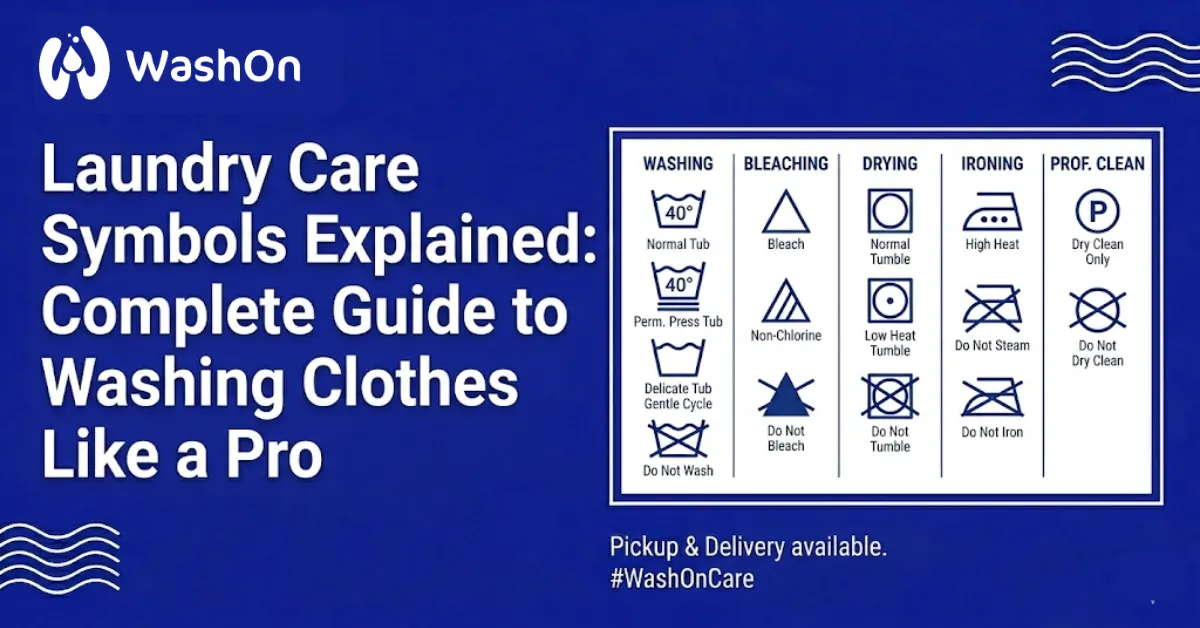
The washing symbol usually resembles a small tub filled with water. This icon will inform you, if a garment may be washed by a machine, needs to be hand-washed, or may not be washed in water at all. The first thing to do to avoid shrinkage, fading, and damage to fabrics is to understand this type of laundry care symbol.
Machine Wash Symbol (Tub Icon)
A plain tub icon means the garment is safe for machine washing.
If there's a number inside the tub (such as 30, 40, or 60), it indicates the maximum water temperature in Celsius.
- 30°C → Suitable for delicate or lightweight fabrics
- 40°C → Ideal for everyday clothing
- 60°C → Commonly used for towels, bedding, and heavily soiled items
Washing at a higher temperature than recommended can cause shrinking or colour fading.
Hand Wash Symbol (Hand in Tub)
A hand inside the tub symbol means the garment should be washed gently by hand rather than in a machine.
This is best for delicate fabrics such as:
- Silk
- Chiffon
- Lace
- Embroidered fabrics
Hand washing reduces agitation and helps preserve delicate fibers.
Do Not Wash Symbol (Crossed Tub)
If you see a crossed-out tub, do not wash the garment in water.
This symbol often appears alongside a dry clean washing symbol, indicating that the item requires professional cleaning instead of regular washing.
Lines Under the Tub
Lines underneath the tub symbol indicate how gentle the wash cycle should be:
- One line → Gentle cycle
- Two lines → Very gentle or delicate cycle
These markings signal reduced agitation and slower spin speeds to protect sensitive fabrics.
Bleach Symbols on Clothing Labels
A triangle is used as the symbol of bleach. These types of laundry care labels inform you whether or not to use bleach in laundering a garment and what kind.
Plain Triangle
A simple, empty triangle means bleach is allowed. This is commonly seen on white cotton garments and durable fabrics.
Triangle with Two Lines
If the triangle contains two diagonal lines inside, only non-chlorine bleach should be used. Chlorine bleach can be too harsh and may damage colored or delicate fabrics.
Crossed Triangle
A crossed triangle means do not bleach. Using bleach on such garments may permanently weaken fibers, cause discoloration, or create patchy fading.
Bleach is powerful, but it is also harsh on fabrics. Ignoring these laundry care symbols can result in permanent fabric damage, so always check the label before using bleach.
What Does the Dry Clean Symbol Mean?
One of the most generally misinterpreted but useful laundry care symbols that appear on clothes labels is the dry clean washing symbol. It is depicted in the form of a plain circle, and it shows that the garment should be cleaned by a professional rather than washing it with water. Unlike machine wash symbols, this icon warns that traditional water washing may damage the garment's structure, color, or texture. Knowledge of this symbol can save the expensive mistakes and prolong the life of fine clothes.
A plain circle means the garment should be professionally dry cleaned and a circle with letters like P, F, or A gives technical advice to the dry cleaner on which solvent to use. When the circle is crossed, dry cleaning of the garment should not occur. When a label states "Dry Clean Only," the garment should never be washed in water as it will either become smaller, lose shape, discharge color or be distorted.
Wool suits, blazers, silk sarees, evening gowns, and structured jackets are some of the garments that usually feature the dry clean washing logo. These garments rely on structured tailoring and delicate fabrics that cannot withstand agitation or heat. Any effort to machine wash them may cause permanent damage, bending, and costly replacement, thus it is safe to entrust them to professional cleaning.
Understanding Fabric Types & Why Symbols Matter
Various fabrics respond to water, heat, friction, and detergents differently. That is why laundry care symbols exist to protect each garment based on its unique fabric properties. Failure to pay attention to these symbols may result in shrinkage, distortion, fading, or permanent damage.
- Cotton is comfortable and easy to wear, therefore it is suitable to be used everyday. Nevertheless, it may become smaller when subjected to any high temperature during washing or drying. Following the recommended temperature on the label helps maintain the garment's size and softness.
- Wool is extremely susceptible to heat and motion. When not washed correctly, wool fibers can be felt, meaning they tighten and shrink when exposed to heat and agitation. That's why wool garments often require gentle washing or professional cleaning.
- Silk is a fine protein fiber which may lose its strength when wet or harshly washed. Silk can lose its shine and structure when exposed to water, strong detergents, or high temperatures. That is why most silk garments come with special care instructions.
- Polyester is a synthetic fabric and is resilient to wrinkles and sensitive to heat. Too much ironing may result in melting or non-removable shine marks.
How to Wash Clothes Like a Pro
The first step to washing clothes like a professional is a simple habit: always look at the label. Laundry care symbols provide clear guidance on washing temperature, cycle type, drying method, and ironing settings. These symbols should be read before putting any garment in the machine. Then sort your clothes properly by color (whites, darks, brights), fabric type (delicates, synthetics, heavy fabrics), and weight. It is unnecessary to mix heavy items such as towels with lighter materials that can cause friction and damage.
Then the right detergent and water temperature should be selected. Wash delicates with light detergents and use heavy ones in durable or dirty clothes. Always remember that higher heat does not mean better cleaning; it often causes shrinking and fading. Above all, respect the dry clean washing symbol when you see it on the label. In case a garment needs to be professionally cleaned, do not experiment with washing it by water, it can forever bend the fabric or its shape.
Conclusion
The key to protecting your wardrobe and extending the life of your clothing is understanding laundry care symbols. These tiny yet significant symbols give a straight forward guidance on how to wash, dry, bleach, iron and clean professionally. With their help, you will be able to avoid shrinkage, loss of colour, damage to the fabric, and expensive replacement.
WashOn provides professional laundry and dry cleaning services in Dubai, ensuring expert garment care with convenience and reliability.
The dry clean washing symbol is important and should be given special attention since it refers to the time when professional cleaning is required to preserve the structure and quality of the garment. Learning the symbols of laundry care does not demand any special skills, but only awareness and practice. By following care labels correctly, you can wash your clothes like a pro and keep your favorite outfits looking fresh and new for years.
Frequently Asked Questions (FAQs)
1. What are laundry care symbols?
Laundry care symbols are standardized icons printed on clothing labels that provide instructions for washing, drying, ironing, bleaching, and professional cleaning. These symbols help protect fabrics from damage and ensure garments maintain their shape, color, and quality over time.
2. What does the dry clean washing symbol look like?
The dry clean washing symbol appears as a simple circle. If the circle is crossed out, it means the garment should not be dry cleaned. Letters inside the circle usually indicate technical solvent instructions for professional cleaners.
3. Can I wash clothes labeled dry clean only?
It is not recommended. Ignoring the dry clean washing symbol and washing such garments in water can cause shrinkage, color bleeding, loss of structure, or permanent fabric damage.
4. What temperature should I use if no number is shown?
If no specific temperature is mentioned, it's safest to use cold or mild settings. Lower temperatures reduce the risk of shrinking, fading, and fiber damage.
5. Why do some garments require dry cleaning?
Certain fabrics and structured garments cannot tolerate water, heat, or agitation. Dry cleaning uses specialized solvents that clean the fabric without causing distortion, shrinkage, or weakening of fibers.
off your list?