TL;DR
- •This blog is for Dubai apartment dwellers and families dealing with compact built-in wardrobes in Marina, JLT, Business Bay, JVC, and similar areas who want to store more clothes without clutter.
- •Most folding guides are written for walk-in closets. Dubai wardrobes are usually shallow and built into niches, so the folding method matters more here than almost anywhere else.
- •Learning how to fold a shirt properly using the file folding method can help you make much better use of limited drawer space.
- •Not everything should be folded. Kanduras and abayas hold their shape better on a hanger, and tightly folding certain fabrics in humid storage can invite mildew.
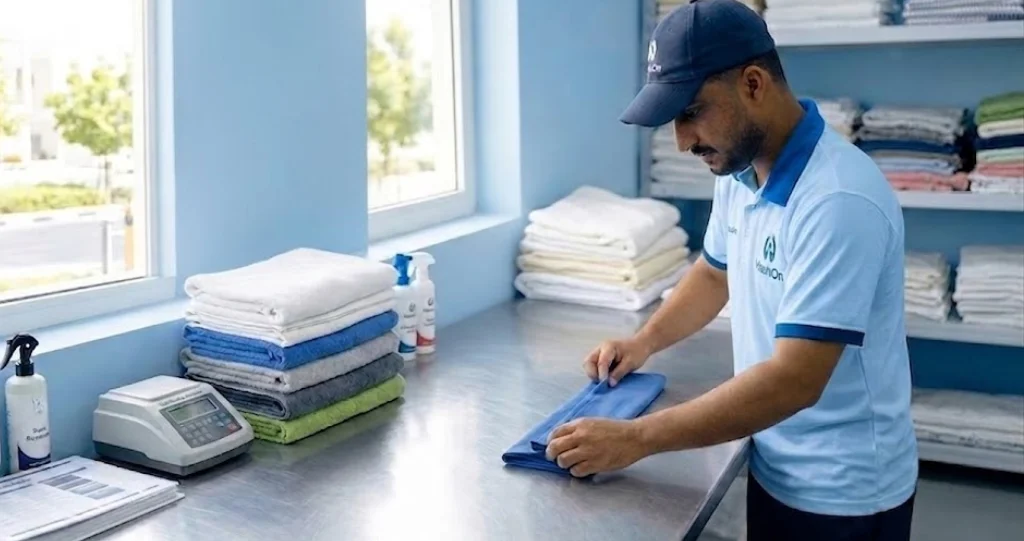
- •Good folding saves space, but consistent, professional pressing is what actually makes folded clothes look sharp when you pull them back out. WashOn's wash and fold service picks up the slack when time is short.
Dubai apartments are not built for deep closets. A one bedroom in JVC or a studio in JLT typically comes with a built-in wardrobe niche, not the sprawling walk-in space you see in home organization videos filmed in the US or UK. That single fact is why so many people search for how to fold clothes to save space, and it's also why most of the advice they find online doesn't quite work.
This guide fixes that gap. It covers exact folding techniques that free up real drawer space, a proper breakdown of how to fold a shirt so it stands upright like a filed folder, and local details competitor content skips entirely: how to handle kanduras and abayas, and why Dubai's humidity changes the rules for what should be folded at all.
By the end, you'll know which folding method suits which garment, how to organize a shallow wardrobe niche, and when it's worth handing a job to a professional wash and press service instead.
Also Read:
Why Folding Technique Matters More in Dubai Than Elsewhere
Space saving folding advice from Western blogs usually assumes you have a generous dresser or a walk-in closet with adjustable shelving. Dubai's residential layouts work differently. New build apartments across Dubai Marina, Business Bay, and Downtown lean heavily on built-in wardrobe niches with fixed shelf heights, which means the amount of usable space per shelf is fixed too.
That constraint changes what good folding actually means. A loosely rolled t-shirt might look tidy in a deep drawer, but stacked into a narrow, shallow shelf, it collapses sideways and wastes height. Structured, flat folds that stand upright are far more efficient in this kind of storage.
Most guides overlook another factor entirely: Dubai's climate. The combination of high outdoor humidity and air-conditioned interiors means wardrobes can experience shifts in temperature and humidity, particularly when doors are opened often or rooms aren't well ventilated. If clothes are stored while damp, or a wardrobe has persistently high humidity and poor airflow, moisture can contribute to musty odors and, over time, increase the risk of mildew. Because of Dubai's climate, saving space should never come at the expense of proper airflow and fabric care.
File Folding Method: The Single Best Upgrade for a Small Wardrobe
Remove one technique from this guide, and this is it. Traditional folding usually means stacking clothes on top of one another, so you have to lift the pile to reach something near the bottom. File folding folds every piece of clothing into a neat, upright rectangle that sits like a folder in a filing cabinet.
The space-saving benefit is especially noticeable in a compact Dubai wardrobe. Each item is visible at a glance, so nothing gets buried. Depending on the garment and shelf dimensions, file folding can also help you fit more items into the same space while keeping each piece easy to access.
To fold a t-shirt, lay it flat, fold both sides toward the middle so the sleeves sit neatly along the sides of the body, then fold in thirds from the bottom up rather than in half. That creates a smaller, sturdier rectangle that stands upright on its own without flopping over.
This method works just as well for shorts, leggings, and folded pyjama sets. For heavier knits, avoid overly tight folds or repeated creases in the same place. Instead, fold the sleeves flat against the body and fold the sweater in thirds.
How to Fold a Shirt: A Step-by-Step Guide
Shirts are where most people lose the most drawer space, mainly because sleeves get folded inconsistently and add unnecessary bulk. Here's a method that keeps a shirt compact, wrinkle resistant, and easy to stack.
For a short sleeve or t-shirt
- Lay the shirt face down on a flat, clean surface and smooth out any bunching with your hands.
- Fold one side in toward the centre, bringing the sleeve with it so it lies flat against the body of the shirt.
- Repeat on the other side, so you're left with a neat rectangle.
- Fold the bottom hem up to the collar for a doubled fold, or fold it in thirds for the file folding method described above.
- Flip it over. It should now sit as a compact, even rectangle.
For a long sleeve or dress shirt
- Button the top few buttons before you begin. This keeps the collar and placket straight through the fold.
- Lay the shirt face down and fold one side in about a third of the way, letting the sleeve fall diagonally across the back.
- Fold the sleeve back so it lines up with the edge of the body fold, not hanging past it.
- Repeat on the other side.
- Fold the bottom hem up to just below the collar, then fold once more if you want a smaller final size for a shallow shelf.
The most common mistake here is skipping the smoothing step at the very start. Any crease that's already in the fabric when you begin folding gets locked in, and no amount of careful technique afterward will undo it. This is also where a proper wash and press beforehand makes the biggest visible difference, since a shirt that's already crisp folds cleaner and holds its shape far longer on the shelf.
Folding Pants, Sweaters, and Bulkier Items
Shirts aren't the only space hogs. A few adjustments handle the rest of a typical Dubai wardrobe.
Pants and jeans: Lay flat, fold one leg on top of the other lining up the seams, then fold in half or thirds depending on shelf height. For denim, which is bulkier, a loose roll can sometimes save space, particularly in drawers or deep storage areas. For shallow wardrobe shelves, though, a flat or file-style fold is usually easier to organize.
Sweaters and hoodies: Avoid using the same compact sleeve-tuck fold you might use for lightweight t-shirts if it creates bulky or repeated creases. Instead, fold the sleeves flat against the body first, then fold the sweater in thirds rather than in half. This spreads fold pressure across a wider section of fabric.
Towels: Fold lengthwise in thirds, then fold across once or twice depending on shelf depth. Standing towels upright, file folder style, on a bathroom shelf works the same way it does for t-shirts and saves a surprising amount of linen closet space.
Kanduras and Abayas: Where Folding Isn't Always the Right Call
This is the part almost every generic folding guide misses, and it matters for a large share of Dubai households.
Kanduras and abayas are structured, often layered with delicate embellishment, embroidery, or a subtle scent from bukhoor, and they hold their shape best when hung rather than folded. Folding a kandura along the same crease repeatedly can eventually weaken the fabric at that line and cause visible creasing that a quick press won't fully correct. A padded or wide hanger that supports the shoulder line properly is the better long term choice if wardrobe space allows it.
If hanging space genuinely isn't available, and that's common in a smaller studio or one bedroom niche, fold loosely rather than tightly. Fold the sleeves first, then fold the body in half or thirds depending on length, avoiding a tight, compressed fold that traps creases into embroidered or beaded sections.
For abayas specifically, the same principle applies. A loose fold that gets shaken out and rehung periodically will hold its shape far better over time than a tightly rolled or compressed fold left untouched in a drawer for weeks. If a piece needs proper care beyond routine airing, our guide on how to clean an abaya at home covers the details.
Humidity, Storage, and the Mistake Most People Make
Dubai's combination of AC cooled interiors and high outdoor humidity creates a specific storage risk that's rarely mentioned in general folding advice: moisture remaining trapped in tightly packed clothing, particularly if garments are stored before they are completely dry.
Cotton, linen, and other breathable fabrics need a small amount of airflow even in storage. A wardrobe packed too tightly with compressed, folded stacks can trap humidity against the fabric, and over weeks this is exactly the kind of environment that leads to a musty smell or, in worse cases, mildew spotting.
A few practical adjustments prevent this without giving up any of the space savings from proper folding:
- Leave a small gap between folded stacks rather than compressing them wall to wall.
- Avoid folding and storing anything that isn't completely dry, including items that came out of the dryer slightly damp.
- If you're storing seasonal or rarely worn items long term, make sure they are clean and completely dry before putting them away. Choose storage that protects them from dust without trapping moisture. Avoid sealing damp garments in airtight containers.
This single adjustment, leaving breathing room, can help prevent wardrobes from developing stale or musty odors, particularly during more humid periods in Dubai.
When Folding Isn't Enough: Letting Professional Care Do the Heavy Lifting
Good folding techniques solve the space problem. They don't solve the time problem, and for busy professionals and families across Dubai, time is usually the bigger constraint. Laundry piles up, ironing gets postponed, and even the best folding method doesn't help much if the shirt going into the drawer was already wrinkled coming out of the machine.
This is where a consistent wash and fold service changes the equation. WashOn serves households across Dubai from its own facility rather than outsourcing laundry to a third party. That means each load goes through a consistent process from washing to folding. Clothes come back clean, neatly folded, and ready to go straight into the wardrobe without the extra smoothing, straightening, or refolding a rushed laundry job at home usually needs.
Pickup and delivery are free, and depending on the service you choose, your clothes are returned folded within 24 hours. Booking takes a couple of minutes through the WashOn app, website, or WhatsApp. For kanduras and other structured garments specifically, a proper pressing service can help restore a crisp finish when needed, and proper hanging and storage afterward reduces repeated creasing between wears.
The folding techniques in this guide can help you build a genuinely more organized wardrobe. Pairing them with a reliable laundry service is what keeps that wardrobe looking that way week after week, without eating into a Saturday morning.
tidier wardrobe?
Conclusion
Clothes folded to save space work best when the folding method actually suits the garment and the wardrobe it's going into. File folding turns a shallow shelf into a far more efficient storage space by letting clothes stand upright, which makes each item easier to see and reach. A properly folded shirt should hold its shape as a neat, evenly sized rectangle. Knowing when to hang instead of fold matters just as much, especially for kanduras and abayas.
Another useful Dubai-specific habit is leaving some breathing room between folded stacks, particularly during humid periods, to reduce the risk of musty odors.
If you'd rather skip the washing, drying, and folding yourself, WashOn's wash and fold service can pick up and return your laundry, with your clothes back folded within 24 hours. Book a pickup through the app, website, or WhatsApp. Your wardrobe works hard enough already.
Frequently Asked Questions
What is the best way to fold clothes to save space in a small Dubai apartment?
The file folding method, where each item is folded into a compact rectangle that stands upright rather than being stacked flat, works well in the shallow, built-in wardrobe niches typical of Dubai apartments. It also keeps everything visible so nothing gets buried at the back of a shelf.
How do I fold a shirt so it doesn't get creased?
Smooth out wrinkles before you start folding, fold the sides in so the sleeves lie flat against the body, then fold the bottom up toward the collar. Any crease already present before you fold will stay locked in, so a freshly pressed shirt always folds cleaner than one straight out of a laundry basket.
Should I fold or hang my kandura and abaya?
Hanging is generally better for kanduras and abayas, since it prevents the repeated crease lines that folding can cause on structured or embellished fabric. If hanging space isn't available, fold loosely rather than tightly, and reshape the garment periodically.
Does folding clothes tightly cause mildew in Dubai's climate?
It can, if fabric is packed too tightly with no airflow in a humid wardrobe. Leaving small gaps between folded stacks and making sure clothes are completely dry before folding reduces this risk significantly.
Is rolling clothes better than folding for saving space?
Rolling works well for casual, lightweight items like t-shirts and casual pants, especially when packing a bag. Folding is generally better for structured or bulkier fabric, since rolling can create less controlled creasing in heavier material.
How can WashOn help if I don't have time to fold laundry properly?
WashOn's wash and fold service handles the laundry process at its Dubai facility and returns clothes clean and neatly folded, with your order back within 24 hours on the standard service. With free pickup and delivery booked through the app, website, or WhatsApp, it removes the folding step entirely on busy weeks.