TL;DR
- •This blog is for Dubai residents, busy professionals, and families who want to understand whether a wash and fold laundry service actually protects their clothes better than washing at home.
- •Most fabric damage happens from things people do without realizing it: wrong water temperature, overloaded machines, and high heat drying.
- •A professional wash and fold laundry service protects garments through careful sorting, controlled wash temperatures, balanced loads, and fabric appropriate drying.
- •Dubai's hard water, dust, and heat add extra stress to fabric that home laundry routines usually aren't built to handle.
- •Choosing a reliable wash and fold service means fewer shrunk sweaters, faded colours, and worn out fabrics over time.
Wash and fold laundry service is often seen as a convenience play, something you use when you're too busy to do laundry yourself. What gets less attention is what it does for your clothes. Every load you run at home carries small risks: the wrong water temperature, an overstuffed machine, a dryer cycle that runs a few degrees too hot. Over months and years, these small mistakes add up to fading, shrinking, and fabric that wears out long before it should. This blog looks at exactly how a professional wash and fold laundry service protects your clothes, what happens differently behind the scenes, and why Dubai's climate makes this protection matter even more than it would elsewhere.
Also Read:
Why Most Fabric Damage Happens at Home, Not in the Wash
It's a common assumption that clothes wear out simply from being worn and washed enough times. In reality, most damage traces back to specific handling decisions, not the age of the garment itself.
Home washing machines are built for convenience and efficiency, not fabric preservation. They're designed to fit as much laundry as possible into a single cycle, run on a handful of preset temperature options, and rely on whatever detergent is in the cupboard that week. None of this is calibrated to the specific fabric in front of you.
The result is that a cotton t-shirt, a linen shirt, and a pair of activewear leggings often end up in the same wash, on the same setting, with the same detergent. Each of these fabrics reacts differently to heat, agitation, and chemical exposure, and when they're all treated the same way, at least one of them comes out worse for it.
A wash and fold laundry service exists specifically to remove this guesswork. That distinction, treating each fabric type according to what it actually needs, is where the protection starts.
The Sorting Step Most People Skip at Home
Sorting sounds basic, but it's the single biggest factor in whether your clothes come out of a wash cycle intact or damaged.
Professional wash and fold laundry services sort clothes by colour, fabric weight, and fabric type before anything touches water. Dark colours are separated from light ones to prevent dye transfer. Heavier fabrics like jeans and towels are kept apart from delicate items like thin cotton shirts, so buttons and zippers don't snag or tear lighter material during the wash.
At home, sorting often gets reduced to "lights and darks" if it happens at all, especially when laundry has piled up and the goal becomes clearing it out quickly. Under time pressure, delicate pieces frequently end up washed alongside jeans, gym wear, or towels with rough textures, and that's when snagging, pilling, and colour bleeding start to happen.
A wash and fold service treats sorting as a fixed step in the process, not an optional one, which is precisely why fewer garments come back damaged.
Getting Water Temperature Right for Each Fabric
One of the most common laundry mistakes at home is using the wrong water temperature. Hot water can shrink natural fibres like cotton and wool, while cold water may not always remove oily stains or heavily soiled items effectively. Choosing the right temperature for each fabric helps clothes stay in better condition for longer.
Professional wash and fold services adjust the water temperature based on the fabric type instead of using a single setting for every load. While this may seem like a small operational detail, it is one of the reasons professionally laundered clothes retain their colour, shape, and overall condition for longer.
How Load Size and Balance Prevent Wear and Tear
One of the least obvious sources of damage to fabric is an overloaded washing machine. When a washing machine is overloaded, clothes don't have enough room to move freely. Detergent doesn't rinse out properly, fabrics rub against each other more during spinning, and both the clothes and the machine experience extra wear.
This is a common mistake at home because running fewer, fuller loads feels more efficient. It saves time and water but has a negative effect on fabric condition. Overloading is one of the quickest ways of leaving detergent film in fibres, causing the fabric to become stiff and colours to fade with each wash.
Commercial laundry machines allow operators to maintain proper load sizes more consistently because of their larger capacity and controlled processes. These loads are still balanced and sized to suit the fabric type, ensuring clothes are treated with the amount of movement and rinsing required, but not excessive.
Why Drying Is Often More Damaging Than Washing
Even if washing gets clothes clean, drying is often the stage where the most fabric damage occurs. High heat is one of the biggest reasons for shrinkage, loss of elastic, and fibre breakdown, and it also happens to be one of the easiest steps at home that you can get wrong, as most dryers default to high or "normal heat", no matter what is in them.
Repeated exposure to high drying temperatures weakens fibres over time, leading to shrinkage, loss of softness, and reduced durability. Elasticity of waistbands and cuffs deteriorates quicker than expected. Synthetic fabrics commonly used in activewear can pill or lose their stretch under heat they weren't meant to withstand.
Professional wash and fold services adjust drying methods based on the fabric. Garments that should not be machine dried are air-dried, while others are dried at controlled temperatures by adjusting the temperature and time of the dryer. This is one thing that can make the difference between clothes lasting for years and clothes losing their shape, softness, or fit after only a few months.
Dubai's Climate Adds a Layer of Fabric Stress Most People Don't Account For
These fabric care principles apply anywhere, but Dubai's climate creates a few additional challenges that most general laundry guides don't cover.
- Fine desert dust settles deep into fabric fibres. Unlike ordinary dust, Dubai's fine sand works into the weave of garments such as kanduras and structured abayas, making them look dull and requiring more thorough cleaning than a standard wash can always provide.
- Hard water affects both fabrics and detergents. Dubai's water contains a high level of dissolved minerals that can reduce detergent effectiveness and leave mineral deposits in fabric over time, making clothes feel stiffer, whites look duller, and colours lose their brightness unless detergent use and rinsing are adjusted.
- Frequent temperature changes put extra stress on fabrics. Moving between air-conditioned interiors and Dubai's outdoor heat, combined with sweat and regular washing, gradually weakens synthetic and blended fabrics, particularly activewear and workwear.
- Perfume and bukhoor leave residue behind. Repeated application of oud, bukhoor, or alcohol-based perfumes on garments such as abayas and kanduras can build up over time, affecting both the feel and freshness of the fabric if not washed out properly.
A laundry service in Dubai should account for these local conditions rather than relying on fabric care practices designed for cooler climates.
How WashOn Approaches Wash and Fold Laundry Protection in Dubai
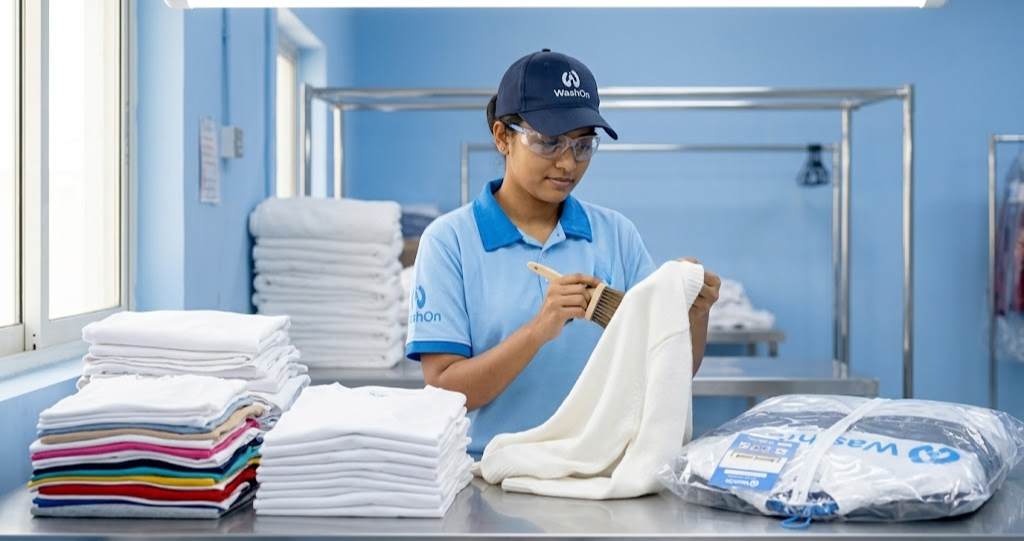
WashOn has designed its wash and fold service around the fabric care challenges common in Dubai. All laundry is processed in its in-house facility rather than being outsourced, helping maintain consistent quality control.
Every order is sorted by colour, fabric type, and care requirements before washing begins. This ensures delicate cotton, structured abayas, and everyday clothing receive the treatment best suited to each fabric. Wash temperatures and detergents are selected according to the fabric type rather than using the same settings for every load, as this helps counter the impact of Dubai's hard water on colours and fabric over time.
The same care is taken with drying. Garments are dried using controlled low-heat settings or air-dried when appropriate, helping minimise shrinkage and protect elastic fibres, especially for synthetic and performance garments, which matters most during the hotter months in Dubai.
This is a key factor in WashOn's customer rating of 4.9 stars and serving over 50,000 households in Dubai. Fabric protection doesn't have to be inconvenient, since you can book the wash and fold service and have it picked up at your doorstep through the WashOn app, website, or WhatsApp, with a 24-hour turnaround for standard cleaning.
fabric-first.
Making Wash and Fold Part of a Longer Term Fabric Care Routine
Protecting your clothes isn't a one time decision, it's the result of consistent handling over every single wash. A garment that's sorted correctly, washed at the right temperature, and dried without excess heat once will look fine. A garment treated that way every week, for years, is the one that actually holds its shape, colour, and texture over time.
This is where a professional wash and fold laundry service earns its value beyond convenience. It's not just about getting time back, though that matters too. It's about consistency that's difficult to maintain at home once schedules get busy, loads get bigger, and sorting starts to slip.
If your everyday laundry routine has started to feel like a trade off between saving time and protecting your clothes, that's usually a sign it's time to bring in a service built to handle both. Schedule your pickup with WashOn and let your everyday wash and fold laundry get the same care as your favourite pieces.
Frequently Asked Questions
Does a wash and fold laundry service really protect clothes better than washing at home?
Yes, when the service sorts fabrics properly, controls wash temperature, and avoids overloading machines. These are the same principles that protect clothes at home, but they're applied more consistently by a professional wash and fold laundry service than they typically are in a busy household routine.
Will my clothes shrink with a wash and fold service?
Shrinkage usually comes from high heat during washing or drying rather than the wash and fold process itself. A reliable wash and fold laundry service matches temperature settings to fabric type specifically to prevent this, which is one of the main protections it offers over a generic home wash.
How does Dubai's water affect my laundry?
Dubai's tap water has a high mineral content, which reduces detergent effectiveness and can leave fabric feeling stiffer or looking duller over time. A wash and fold laundry service that accounts for hard water conditions adjusts detergent and rinse cycles to reduce this buildup.
Can a wash and fold laundry service handle abayas and kanduras?
Yes, though these garments benefit from being sorted separately due to their fabric weight and structure. Dust tends to settle into the weave of these garments more than lighter everyday clothing, so a wash cycle suited to their fabric type helps remove it fully.
Will my clothes get mixed up with someone else's during a wash and fold service?
No, with a properly run wash and fold laundry service, each order is tagged and kept separate throughout sorting, washing, drying, and folding. This is a standard hygiene and quality practice, not an optional add on.
Is wash and fold different from dry cleaning?
Yes. Wash and fold uses water based washing for everyday fabrics like cotton and casual wear, while dry cleaning uses solvent based cleaning for delicate or structured garments that water could damage. Most households use wash and fold for daily laundry and reserve dry cleaning for formal or delicate pieces.