TL;DR
- •Whether the stain is from a melted bar left in a hot car or a smudge on a school shirt, this guide is for anyone with a chocolate-stained garment who wants to get it out before it sets.
- •Chocolate stains are tough because they contain two components, cocoa solids and cocoa butter, and both need their own stain removal approach.
- •The basic process is straightforward: rinse the stain from the back with cold water, pretreat it with detergent, then wash. Acting quickly matters more than anything else.
- •Dubai's warm weather works against you. Where a stain might take longer to set in cooler conditions, Dubai's heat can make chocolate melt and spread quickly, especially inside a parked car.
- •Some stains are better left to a professional. White kanduras, thobes, silk, and embellished abayas need a gentler approach than everyday cotton.
Also Read:
Chocolate stains often look small when they first happen, but they can get harder to remove if left untreated. It is always the same story: a melted square on a car seat, a mess on a toddler's shirt after an ice cream run, or a smear from a slice of cake at a family gathering. Get the treatment wrong or leave it too long, and the stain sets into the fabric.
This guide covers how to properly remove chocolate stains from clothing, why Dubai's heat makes them harder to deal with, and when it is better to leave the garment to the professionals.
Why Chocolate Stains Are Harder to Remove Than They Look
From a stain removal point of view, chocolate is not one substance. It contains cocoa solids, pigments, and fats such as cocoa butter. The cocoa solids leave the dark mark, while the fats leave an oily residue that makes the stain harder to shift.
That is why a method that only addresses one part of the stain can leave behind a visible mark or an oily residue. You have to lift both the pigment and the oil, and do it before either one has a chance to bond with the fibres of the fabric.
Temperature matters more here than most people expect. That is why the usual advice is to start with cold water on a fresh chocolate stain, never hot, since heat can make some of the stain's components harder to remove, especially before the stain has been treated at all.
Common Situations Where Chocolate Stains Happen in Dubai
A few situations come up again and again.
A parked car with melted chocolate. Dubai's summer heat can make chocolate melt fast once a parked car heats up after the air conditioning switches off. It does not just melt, it can spread into the fabric and become harder to remove the longer it sits in a hot car. Chocolate left in a pocket, on a car seat, or inside a bag can melt and spread onto the fabric before anyone notices.
Children's clothes and school uniforms. One of the most familiar laundry dilemmas of parenting is the white shirt collar that ends up with a chocolate mark, or a white cotton uniform with a smear that never quite came out.
Abayas and kanduras at family gatherings. Chocolate desserts show up often at Eid celebrations, weddings, and majlis gatherings, where a spill can easily land on light coloured traditional wear. The same stain on a white kandura is far more visible, and far more stressful, than it would be on a patterned shirt.
Fine and delicate clothing. A simple cotton abaya can generally tolerate the same gentle home treatment as other cotton garments, but silk, chiffon, and beaded abayas need more careful handling, and an aggressive scrub can do more damage than the stain itself.
Step by Step: Removing Chocolate Stains From Everyday Fabrics
For cotton, cotton blends, and most synthetic fabrics, this sequence works well when you catch the stain early.
Step 1: Remove Excess First
Use a dull knife, a spoon, or the edge of a card to gently scrape off any solid chocolate, working from the outside of the stain toward the centre so you do not spread it into clean fabric. If the chocolate is soft and smeared rather than solid, a few minutes in the freezer can firm it up enough to lift off cleanly, though this step is best skipped on delicate fabrics.
Step 2: Rinse From the Back
Turn the garment inside out and run cold water through the back of the stain, not the front. This pushes the chocolate out of the fibres instead of driving it deeper in, which is what happens when you rinse from the stained side. Hold the fabric under a running tap for 30 to 60 seconds.
Step 3: Pretreat With Detergent
Rub a small amount of liquid laundry detergent directly into the stain, working it in gently from both sides of the fabric. Liquid dish soap works as a substitute if that is what is on hand, since it is formulated to break down fatty cocoa butter. Let it sit for five minutes.
Step 4: Soak in Cold Water
Soak the garment in cold water for 15 to 20 minutes, gently rubbing the stained area every few minutes with your thumb and fingers to loosen the remaining residue. Stick with cold water through the pretreatment and soaking stages, especially while the stain is still visible, since heat can make any remaining stain harder to remove.
Step 5: Wash as Normal
Once the visible stain has faded, wash the garment according to its care label, using the warmest water the fabric allows. Check the area before drying. If any trace remains, repeat the pretreatment and soak rather than putting it in the dryer, because heat from the dryer can set whatever is left for good.
Step 6: If a Stubborn Mark Remains
If a faint mark remains after washing, repeat the detergent treatment rather than reaching straight for another cleaning product. For a stain that will not shift, follow the care label or consider professional cleaning.
Why Dubai's Heat Makes This Harder
The steps above apply anywhere in the world, but Dubai adds a challenge most stain removal guides do not account for.
In summer, temperatures regularly pass 45 degrees Celsius outside, and in direct sunlight a car can heat up faster than you would expect. In that kind of heat, chocolate can melt and spread much faster, and a stain can dry before you get the chance to treat it. If the garment then goes through a hot dryer cycle before the stain is fully gone, the remaining residue becomes even harder to shift.
This is why speed matters more here than it does as a general stain-removal tip. Treating the stain the same day, ideally as soon as it happens, gets a noticeably better result than waiting for laundry day.
Chocolate Stains on Kanduras, Abayas, and Delicate Fabrics
White and light coloured traditional wear shows chocolate stains more clearly than almost anything else in a Dubai wardrobe, and the fabrics involved often need more careful handling than everyday cotton.
Cotton kanduras can generally follow the same cold water method above, with extra care around collars and cuffs, where the fabric is often finer. Nida fabric, commonly used for abayas, should be treated according to its care label. If machine washing is allowed, a delicate cycle is generally gentler than vigorous scrubbing.
Silk, chiffon, satin, and heavily embellished pieces are a different category altogether. These fabrics can be damaged by the same scraping and rubbing motion that works fine on cotton, and beading or embroidery can loosen with repeated handling. For these garments, blot rather than rub, avoid aggressive DIY treatment, and consider professional cleaning if the stain does not lift easily.
When to Call in Professional Help
Home treatment works well for fresh stains on sturdy, machine washable fabrics. A few situations are worth handing over to a professional rather than risking further damage:
- The stain has already been through a hot wash or dryer cycle and is visibly set
- The garment is silk, chiffon, or has beading, embroidery, or other embellishment
- It is a white kandura, thobe, or occasion abaya, where a wrong move is costly
- Multiple home attempts have not fully lifted the mark
- The item is dry clean only per the care label
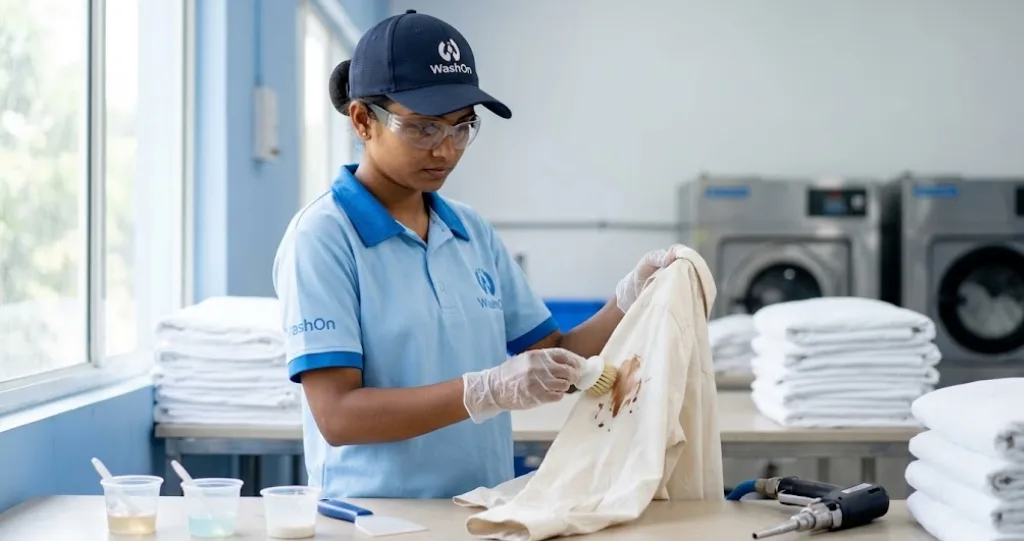
This is where WashOn steps in as a safety net for stains and garments that home treatment cannot safely handle. Standard items may be eligible for a 24-hour turnaround, depending on the garment and service selected. WashOn treats each piece according to its material and care requirements, whether it is a cotton kandura or a beaded abaya, rather than using a one-size-fits-all approach. Free pickup and delivery means you do not need to plan a trip anywhere. Bag the stained items and book a pickup through the WashOn app, website, or WhatsApp.
you'd rather not risk?
Frequently Asked Questions
Does chocolate stain clothes permanently?
No, not usually. Chocolate stains can often be removed if treated properly, but putting a stained garment through a hot wash or dryer can make the remaining mark much harder to remove.
Can I use hot water to remove a chocolate stain faster?
No. Hot water is not the best first step for a fresh chocolate stain, since heat can make some remaining stain components harder to remove. Start with cold water and pretreat the stain before washing, and only move to warm or hot water once the visible stain is gone, following the garment's care label.
What should I do if the chocolate stain has already dried?
Scrape off any hardened residue first, then follow the same rinse, pretreat, and soak method. Dried stains usually need a longer soak and may need the detergent treatment repeated two or three times before the mark fully lifts.
Is it safe to remove chocolate stains from a white kandura at home?
Cotton kanduras generally handle cold water methods well, though it is worth being gentle around collars and cuffs. For a white kandura where you are unsure about the fabric, or where the stain has already set, professional cleaning is the safer route, since bleaching or over-scrubbing can cause visible discolouration.
Does dish soap work as well as laundry detergent on chocolate stains?
Yes, dish soap is a reasonable substitute for laundry detergent, since it helps break down the oily components in chocolate. Use a small amount and rinse the garment thoroughly afterward.
Why do chocolate stains seem worse in Dubai than in cooler climates?
Higher temperatures make chocolate melt and spread faster, particularly inside parked cars. If the stain is left untreated, it can cool and set, becoming harder to remove, which is why quick action matters more in Dubai's summer heat.