TL;DR
- •This guide is for anyone in Dubai who has spotted a pen leak or ink mark on a shirt, kandura, abaya, or bag and wants to know how to remove ink stains from clothes before the fabric is damaged for good.
- •Not all ink is alike. Fountain pens and washable markers usually use water-based ink, ballpoint pens are generally oil-based and need a solvent such as rubbing alcohol, and gel or rollerball ink varies by formulation.
- •Speed matters. A fresh stain treated soon after it happens is usually far easier to remove than one that has already dried or been through a wash and dryer cycle.
- •Dubai's high temperatures and direct sunlight can make fresh ink stains harder to manage, particularly if a garment is left in a hot car or exposed to direct sun.
- •If the garment is white, fragile, or already carries another stain, do not DIY it. Hand it to an expert instead of risking a permanent mark or a bleached patch.
Also Read:
There are few more frustrating ways to start a workday than discovering that a pen has leaked in your shirt pocket. Or maybe your child comes home from school with a blue ink mark on a new kandura sleeve. The good news is that many fresh ink stains can be treated at home if you use the right method and act quickly, though it is worth doing things correctly so you do not create a bigger problem than the one you started with.
This guide covers exactly how to do it, what not to do, and when it is time to hand a garment to a professional instead. We also cover a few things that matter specifically in Dubai, where the climate, heavy AC use, and the way people dress here, kanduras and abayas included, all affect how an ink stain behaves and how soon it needs treatment.
Why Ink Stains Are Trickier Than Most Other Stains
Ink is not one uniform, predictable material. Ballpoint pens, gel pens, fountain pens, and markers use different formulations, and each reacts differently to water, heat, and solvents.
This is why generic stain removal tips often fail. A method that works on a felt-tip marker may do nothing for a ballpoint stain, and using the wrong method on the wrong ink can drive the pigment further into the fabric.
Ink also dries fast. The moment it touches a fabric, pigment begins soaking into the fibres, particularly absorbent ones like cotton. That is why the first few minutes after a spill matter more with ink than with most other stains.
What Type of Ink Are You Dealing With?
Before you reach for any product, take a moment to identify the ink. It changes your entire approach.
Many fountain pens and washable markers use water-based or water-soluble ink. Gel and rollerball inks vary considerably by formulation, so check the pen or manufacturer's guidance when you can.
Oil-based ink is what you get from a standard ballpoint pen. It is thicker, resists water, and needs a solvent such as rubbing alcohol to break it down before it will lift out of the fabric.
Permanent ink, the kind found in markers like Sharpies, is the hardest to treat and may not come out fully with home methods, particularly on light-coloured or delicate fabric.
If you are unsure what caused the stain, start with the gentlest method appropriate for the fabric and test any solvent on a hidden area first. If the garment is delicate, valuable, or dry-clean-only, it is safer to have it treated professionally.
The Right Way to Remove a Fresh Ink Stain
If you have caught the stain within the last hour or so, work through this sequence in order. It gives you the best chance of a full recovery.
Step 1: Blot, Never Rub
Place a clean paper towel or white cloth underneath the stained section of fabric. This stops ink from bleeding through to the layer behind it, which matters a lot on shirts, kanduras, and anything with a lining.
Using another clean cloth, press down firmly on the stain to absorb as much fresh ink as possible. Resist the urge to rub. Rubbing spreads pigment sideways and works it deeper into the weave, turning a small mark into a bigger problem.
Step 2: Apply the Right Solvent
For oil-based ink, rubbing alcohol may help loosen the stain. Test a small amount on a hidden area first to make sure it does not affect the fabric or dye, then apply it without vigorous rubbing, which can spread the ink or damage the fibres. As you work, you should see ink transferring onto the cloth. Move to a clean section of the cloth as this happens, so you are not pressing the lifted ink back into the fabric.
For water-based or water-soluble ink, cold water may be enough to flush out much of the stain, particularly while it is still fresh. Hold the fabric under cold running water from the back of the stain so the water pushes the ink outward rather than further into the weave.
Always test rubbing alcohol on an inside seam or another hidden area first, especially on coloured or dark fabric. Alcohol can affect some fabric dyes and leave a faded patch even after the ink itself is gone.
Step 3: Pretreat With Detergent
Once most of the ink has lifted, work a small amount of liquid laundry detergent or a drop of dish soap into the remaining mark. Gently massage it in with your fingers or a soft toothbrush, then let it sit for a few minutes.
Step 4: Rinse and Wash
Rinse thoroughly with cold water, then wash the garment as you normally would, checking the stain before it goes anywhere near a dryer. If any trace of ink remains, do not dry the item. Heat can set some ink stains more deeply, making them much harder to remove afterwards.
What to Do With a Dried or Set-In Ink Stain
You still have options if the ink has already dried or the garment has already been through a wash.
For a dried stain, apply an appropriate ink stain remover according to the product instructions and gently blot rather than scrub. If you are using rubbing alcohol, test it on a hidden area first and stop if the fabric or dye reacts badly. Repeat the treatment only if the product instructions allow it.
For stubborn stains on white, bleach-safe fabric, a suitable stain remover is usually a safer option than experimenting with hydrogen peroxide. If you do use hydrogen peroxide, check the garment care label first and test it on an inconspicuous area, since it can affect some dyes and finishes.
If you have repeated the process two or three times without real improvement, further DIY treatment is more likely to cause damage than fix the stain. At that point, take the garment to a professional instead of continuing to work on the fabric yourself.
Why Dubai's Climate Makes Ink Stains Harder to Manage
Most stain removal guides are written for cooler climates, where advice to "deal with it when you get home" is realistic. In Dubai, that window is often shorter than you think.
A pen leak in a shirt pocket or a bag left in direct sunlight can expose the stain to significant heat, which makes removal harder. It is sensible in Dubai to treat a fresh ink stain as soon as you notice it rather than leaving it for later.
Air conditioning itself is not a reason to change your stain-removal method. The more practical concern here is exposure to high outdoor temperatures and direct sunlight, so fresh ink should still be treated as quickly as possible. In practice, that means blotting the stain with a clean cloth right away and then following the treatment that matches the ink type and fabric, without adding water indiscriminately, particularly if you suspect an oil-based ink.
Ink Stains on Kandura, Abaya, and Formal Wear
White and light-coloured kanduras can be a particular challenge because ink shows up clearly while the fabric and finish can vary widely. Harsh treatments such as rubbing alcohol may affect dyes or finishes, so check the care label and test any treatment on an inconspicuous area first.
Whenever ink appears on a kandura, blot it gently without rubbing. Because kanduras vary in fabric composition and finish, check the care label and test any treatment on a hidden area first. For valuable or delicate kanduras, professional treatment is the safer choice. A mild detergent pretreatment followed by a cold rinse is a reasonable starting point for washable cotton or cotton-blend kanduras, provided the care label allows it.
Abayas, particularly dark-coloured, silk, chiffon, or embellished ones, need extra care. Rubbing alcohol can strip dye from darker fabrics and damage fragile weaves. A small, fresh mark on a basic washable cotton abaya may be workable at home, but for silk, chiffon, embellished, heavily dyed, or otherwise delicate abayas, professional cleaning is the safer choice.
The same applies to formal office attire, uniforms, or anything with embroidery, lining, or structured tailoring. These are exactly the garments where a wrong DIY move costs more to fix than professional cleaning would have in the first place.
Common Mistakes That Make Ink Stains Worse
A few habits show up again and again, and they usually do more damage than the original stain:
- Scrubbing the stain instead of blotting, which pushes ink deeper into the fibres and widens the mark
- Using hot water, which can set the pigment rather than lift it
- Drying the garment before the stain is fully gone, which can make the ink much harder to remove afterwards
- Skipping a patch test on coloured or dark fabric before applying alcohol or bleach
- Waiting too long to treat the stain, particularly if the garment has been exposed to Dubai's heat or direct sunlight
Avoiding these five habits significantly lowers the risk of turning a manageable stain into a permanent one.
When to Call a Professional Instead of DIY
Not every ink stain is worth the risk of treating at home. A professional cleaner is generally the better choice when:
- The garment is white, delicate, silk, or has embellishment
- The stain has already dried, been washed, or been through a dryer
- You are dealing with a kandura, abaya, or formal piece you cannot easily replace
- Home methods have not shifted the stain after two or three attempts
- You are unsure whether the ink is water-based or oil-based and do not want to risk the wrong treatment
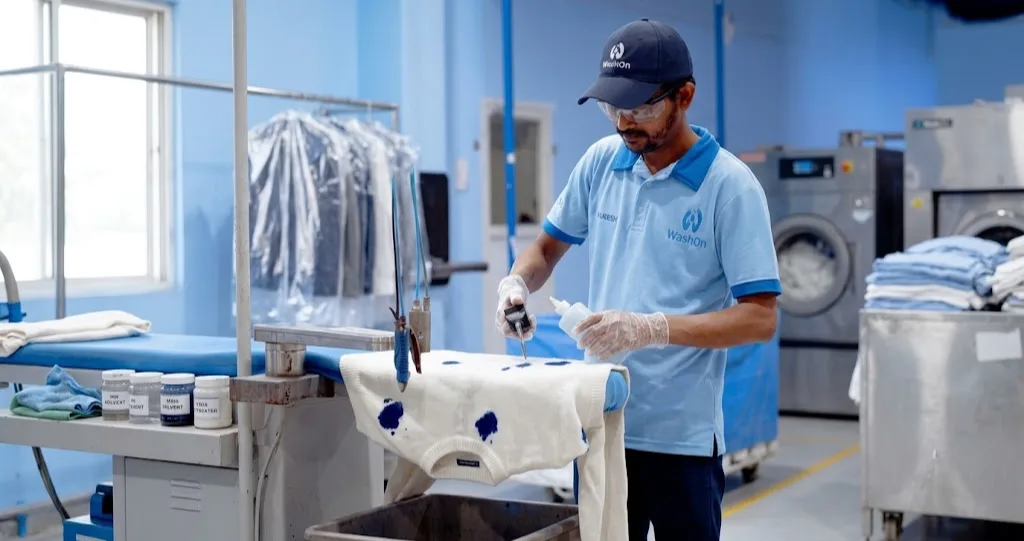
This is where WashOn fits, not as the first thing to try, but as a safety net when a stain matters too much to risk on a DIY attempt. With pickup and delivery and a stated turnaround for standard laundry, WashOn gets a stained garment into professional hands without leaving it untreated for too long, using techniques suited to the fabric rather than a one-size-fits-all approach. Booking is available through the WashOn app, website, or WhatsApp.
Ink stains feel like a disaster in the moment, but most respond well to a fast, methodical approach. Identify the ink type, blot rather than rub, use the right solvent, and get the garment washed before it goes anywhere near a dryer. In Dubai's heat, speed matters even more than usual, so treat a stain the moment you spot it rather than waiting until you get home.
For everyday cotton items, a careful DIY attempt using the steps above may be enough. For anything white, delicate, or already set in, particularly kanduras, abayas, or formal wear, it is worth handing the garment to professionals rather than risking a fix that makes things worse.
you don't want to risk?
Frequently Asked Questions
Can toothpaste remove ink stains from clothes?
Toothpaste is a common home remedy, but it is not reliably effective on most ink types and can leave a gritty residue that is hard to rinse out fully. Rubbing alcohol or cold water, matched to the ink type, is a more consistent approach.
Does hand sanitiser work to remove ink stains?
Sometimes. Hand sanitiser with a high alcohol content may help loosen some oil-based ink stains, but it can also contain gels, fragrances, or other ingredients that leave residue or affect certain fabrics. Test it on a hidden area first.
Can dried ink stains still be removed after washing?
Sometimes, but it is much harder. Once a stain has been through a wash and especially a dryer, the heat and detergent cycle can set pigment into the fibres. A carefully applied alcohol-based treatment may lift some remaining ink, but repeated or prolonged exposure can damage certain dyes and fabrics. For a stain that has already been washed or dried, professional treatment is often safer.
Is it safe to use bleach on ink stains?
Bleach should not be used on coloured fabric, silk, or wool unless the care label specifically permits it. It can damage fibres, alter colours, cause yellowing, and may not fully remove the ink. Always check the care label before using any bleach product.
How do I remove ink stains from a kandura or abaya without damaging the fabric?
Blot the stain immediately without rubbing, and avoid rubbing alcohol unless you have tested it on a hidden seam first. For darker abayas, silk, or embellished pieces, it is safer to bring the garment to a professional cleaner who can match the treatment to the fabric.
Why do ink stains seem to set faster in Dubai than they do elsewhere?
High temperatures and direct sunlight can make fresh stains harder to manage, particularly if a garment is left in a hot car or exposed to strong sunlight. The practical takeaway in Dubai is simple: blot and treat the stain as soon as you notice it.