TL;DR
- •This blog is for anyone in Dubai who has a paint stain on their clothes, whether it's from a weekend DIY project, a villa touchup, a school art class, or a contractor's visit.
- •Speed is the single biggest factor in successfully removing paint stains from clothes. Paint becomes harder to remove as it dries, so treating the stain as soon as possible gives you the best chance of removing it.
- •Paint type is one of the most important factors, along with the fabric and whether the paint is still wet or has dried. Latex and many acrylic paints can usually be treated with water and detergent, while oil-based paints may require a compatible solvent.
- •Delicate fabrics such as silk, chiffon, kandura fabric, and abaya crepe require more careful treatment than sturdier fabrics such as cotton or denim, since some solvents and aggressive cleaning methods can cause colour loss or fibre damage.
- •A dried paint stain becomes much harder to remove and is more likely to permanently damage the garment.
Paint stains are generally easier to remove while they are still wet. Hot, dry conditions can contribute to faster drying, so treating the stain promptly is especially useful in Dubai. That is exactly when most people reach for the wrong product, rub too hard, or leave stains to deal with later, and later is when it becomes permanent.
This guide covers how to remove paint stains from clothes step by step, for both fresh and dried stains, water based and oil based paint, and everyday cotton as well as more delicate pieces like kandura fabric, abayas, and silk. It also covers what not to do, since a wrong move on the wrong fabric can cause more damage than the paint itself.
Also Read:
Why Paint Stains Are Trickier Than Other Stains
Many everyday stains, such as food or sweat, can often be removed with appropriate washing and stain treatment. Paint is different because it's designed to adhere to a surface and form a film as it dries, one that grips the fabric fibres rather than simply sitting on top of them.
That's why time is so important. Fresh paint is generally easier to loosen and remove before it dries, but the appropriate treatment depends on the type of paint. Once paint has dried, it may have formed a film around or between the fabric fibres. At that point, removal usually requires softening, loosening, or carefully lifting the paint without damaging the fabric.
Dubai's climate can compound this issue, since heat and low humidity can cause some paints to dry and evaporate faster, particularly outdoors. The actual drying time still depends on the paint formulation, fabric, airflow, temperature, and humidity. Paint transfer can happen during villa maintenance, renovations, school activities, or DIY projects, whether it lands on a hanging kandura during home upkeep or on a child's uniform during an art project, and a quick response can make a significant difference.
Step 1: Identify Paint Type Before You Do Anything
Choosing the right paint-removal method starts with identifying the type of paint, since using the wrong treatment can spread it or make the stain harder to remove.
Many water-based paints, including latex and some acrylic and children's craft paints, can be treated with water and detergent while they are still wet. Check the product label, since formulations vary, but water-based paints generally have a slightly rubbery texture once dry. If the paint can or tube advises you to clean it up with soap and water, then it is water based.
Oil-based paint (enamel, some furniture and metal paints, artist oil paints) is waxy or slightly greasy even when it is beginning to set, and will often contain the words 'clean up with mineral spirits' or 'thinner'. This is the case with villa exterior paint in the UAE and some door and furniture coatings.
If the paint container is available, check its cleaning instructions first. If you no longer have it, don't rely on a rubbing alcohol test to identify the paint type. Instead, test any cleaning product on an inconspicuous area first and proceed cautiously.
Step 2: Remove Water-Based Paint (Latex and Acrylic)
This is a more common scenario for most households, covering everything from kids' art projects to wall paint splatters.
Scrape off excess paint first. Use a spoon, dull knife, or old card. Lift it away gently rather than rubbing, since rubbing pushes paint deeper into the weave.
Turn the garment inside out and rinse the stain from the back with cool or lukewarm water, following the garment-care instructions. This helps flush the paint out rather than pushing it further into the fabric.
Apply liquid detergent directly to the stain. Work it gently with your fingers or a soft toothbrush, then rinse.
Repeat if needed. Fresh water-based stains usually lift within two or three rounds of this process.
Wash as normal, but check before drying. Never put a stained garment in the dryer until you've confirmed the stain is fully gone. Heat can make remaining paint harder to remove.
For some dried water-based or acrylic paints, isopropyl alcohol may help loosen the residue on suitable fabrics. Test it on an inconspicuous area first and avoid it on delicate, dyed, coated, or embellished fabrics unless confirmed safe. Never use acetone-based nail polish remover on delicate synthetic blends, since it can dissolve certain fibres along with the paint.
Step 3: Remove Oil-Based Paint
Oil-based paint takes more effort because it doesn't respond to water or detergent alone.
Work in a ventilated space, ideally outdoors or near an open window, since the solvents involved have strong fumes. Place an old cloth or cardboard behind the stain so it doesn't transfer through to the other side of the fabric.
Apply a small amount of turpentine or mineral spirits to the stain using a clean cloth, dabbing rather than scrubbing. Work in liquid detergent while the area is still damp with the solvent, then rinse thoroughly.
If the stain persists, follow the paint manufacturer's cleanup instructions rather than soaking the garment in hot water. Avoid heat until you're sure the paint has been removed.
Always test any solvent on a hidden seam first. Some fabric dyes react to turpentine and mineral spirits by fading or running, and this is not something you want to discover in the middle of a stained area.
Step 4: Treat Delicate and Traditional Fabrics With Extra Care
Paint stains can also occur on delicate and traditional garments such as kanduras, abayas, chiffon, and silk. These fabrics require a gentler approach because aggressive scrubbing or strong solvents can cause additional damage.
Kandura and abaya fabrics, especially the latter, tend to be finely woven, so even after the paint has been removed, aggressive scrubbing or strong solvents can create permanent marks or patches. Follow the garment-care label and, where appropriate, blot gently with a compatible cleaning solution. Avoid using rubbing alcohol on coloured or embroidered abayas unless the garment-care instructions and a hidden-area test indicate that it is safe, as alcohol can affect some dyes, finishes, or embellishments. Our guide on how to clean an abaya at home covers general abaya care in more detail.
Do not scrub silk or chiffon, avoid bleach, and for anything marked dry-clean only, leave stain treatment to a professional cleaner, since self-treatment on these fabrics risks permanent damage.
With any of these fabrics, if you're unsure whether a stain will come out safely, it's worth pausing rather than reaching straight for a home remedy. Using the wrong solvent on an expensive or special-occasion garment can cause more damage than the original paint stain, so professional cleaning may be the safer choice.
When DIY Isn't Worth the Risk
A few situations call for professional handling rather than a home attempt:
- The paint has fully dried and set for more than a day or two.
- The stain covers a large area of the garment.
- The fabric is silk, chiffon, embroidered, or otherwise delicate.
- You've already tried a home method and the stain has lightened but not fully lifted.
- The garment has sentimental or high replacement value.
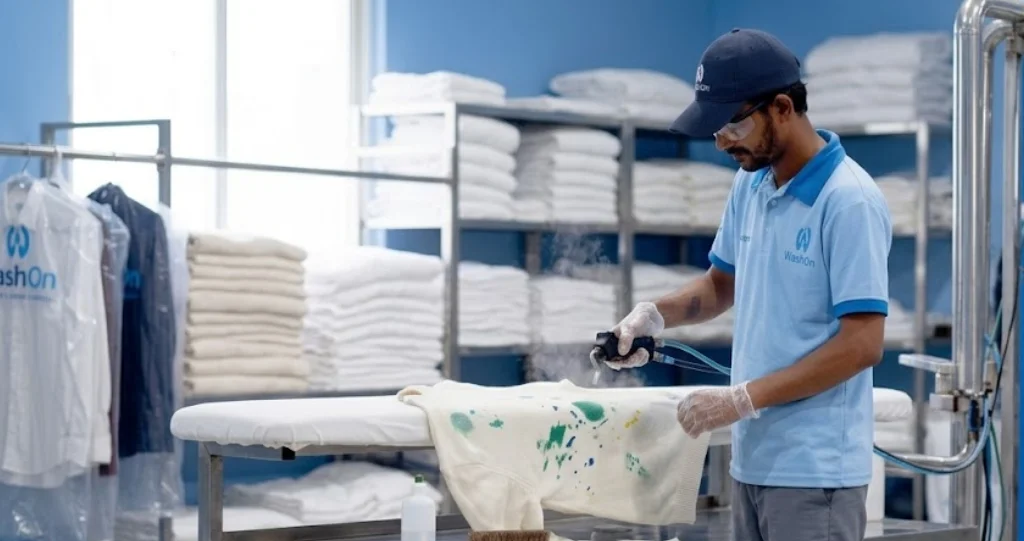
WashOn's in-house dry-cleaning service is another option, particularly when the garment is delicate, valuable, or the paint has already dried. Since garments are processed at WashOn's own Dubai facility rather than outsourced, the team can assess the fabric and paint type before choosing a targeted treatment rather than a generic one-size-fits-all method. With free pickup and delivery and a stated 24-hour turnaround for standard laundry, subject to service conditions, a stained kandura, abaya, or work shirt can be sorted without you needing to identify the paint, test solvents, or risk the fabric yourself. You can book a pickup through the WashOn app, website, or WhatsApp, including same-day pickup where available.
Common Mistakes That Make Paint Stains Worse
A few habits show up again and again and tend to turn a treatable stain into a permanent one:
- Rubbing instead of blotting. This spreads paint into a wider area and pushes it deeper into the weave.
- Using hot water on an unidentified stain. Heat can set certain paints exactly the way a dryer does.
- Drying the garment before confirming the stain is gone. Heat can make some remaining paint stains harder to remove.
- Using acetone on synthetic or blended fabric. It can dissolve certain fibres, not just the paint.
- Waiting too long to act. In Dubai's climate, heat can accelerate drying for some paints, making prompt treatment particularly important.
paint stain packing?
Conclusion
Paint stains are recoverable in most cases, but the outcome depends heavily on how quickly you act, correctly identifying whether the paint is water based or oil based, and matching your method to the fabric. Cotton and denim are generally more forgiving than delicate fabrics, but they can still be damaged by aggressive scrubbing or incompatible solvents. Kandura fabric, abayas, silk, and chiffon are not, and Dubai's heat means the treatment window for any fabric is shorter than most global guides assume.
If a stain has already dried, covers a large area, or sits on a garment you don't want to risk, professional cleaning is a safer route. WashOn's in-house Dubai facility, free pickup and delivery, and 24-hour turnaround make it simple to get a stained garment sorted without guesswork. Book a pickup through the WashOn app, website, or WhatsApp, and let the team handle the rest.
Frequently Asked Questions
Can paint stains be removed after they've dried?
Yes, though it takes more effort than treating a fresh stain. Some dried paint stains can be loosened with a product compatible with the paint type and fabric, but solvent treatment should be approached cautiously. For delicate or dry-clean-only garments, professional cleaning is safer.
Does the type of paint change how I should treat the stain?
Yes. Water based paints like latex and acrylic respond well to detergent and water, while oil-based paints generally require the solvent specified by the paint manufacturer for cleanup. Using the wrong approach can spread the stain instead of removing it.
Is it safe to use rubbing alcohol on all fabrics?
No. Rubbing alcohol may help loosen some dried water-based or acrylic paints on certain sturdy fabrics, but it can affect dyes, finishes, or coatings. Always check the fabric-care instructions and test an inconspicuous area first.
Why does paint seem to set faster on clothes in Dubai?
High temperatures and dry, moving air can cause some paints to dry noticeably faster, particularly outdoors. The exact drying time still depends on the paint formulation, temperature, humidity, and airflow, which is why quick action matters.
What should I do if a stain won't come out after trying home methods?
Stop before making repeated attempts with different products, since mixing chemicals can damage the fabric further. At that point, professional dry cleaning is a better option, particularly for fabrics you don't want to risk.
Can WashOn remove paint stains from delicate garments like abayas?
WashOn's in-house team assesses each stain and fabric individually rather than applying a generic treatment. For a specific paint stain on a delicate or valuable garment, it's best to mention the stain type when booking so the right approach can be prepared in advance.