TL;DR
- •This blog is for Dubai households, especially candle lovers, majlis hosts, and anyone dealing with a fresh wax drip on clothing, abayas, kanduras, or table linens.
- •Candle wax is not really a stain until you make it one. Handled correctly, it lifts off almost completely on its own.
- •The right method depends on temperature control, not scrubbing. Harden it, scrape it, then lift the rest with gentle heat.
- •Dubai's warm climate, along with the fabrics and scented candles commonly used in local households, can affect how quickly wax hardens and how much residue remains.
- •For coloured wax, embellished abayas, or dry clean only fabric, professional care protects the garment better than a DIY attempt.
Candle wax on fabric looks worse than it actually is. The good news is that how to remove candle wax from fabric comes down to a simple principle: change the wax from soft to hard, then lift it away in stages, without ever rubbing it into the weave. This guide walks through the exact method, plus a few things that matter specifically for Dubai homes, including candles with strong fragrance or oil-based blends and the delicate fabrics used in abayas and kanduras.
Also Read:
Two Ways to Handle a Wax Stain
- DIY removal works for washable, durable fabrics: cotton, everyday kanduras, and most cotton-blend garments, as long as the care label permits ironing and stain treatment.
- Professional cleaning is the safer route for delicate, embellished, or dry clean only garments: silk, chiffon, nida, satin, and anything with beadwork or embroidery, where heat or scraping risks damaging the fabric or trim.
Why Candle Wax Stains Are Trickier in Dubai Homes
Many candle wax guides assume the fabric is already at room temperature and that placing the garment in a freezer is practical. Dubai households aren't exactly alike.
Indoor air conditioning keeps most homes cool, but fabric that has been near a candle, or worn outdoors before coming inside, is often warmer than expected. Warm fabric can keep freshly spilled wax soft for longer, giving it more opportunity to spread or settle into the fibres before it hardens.
If freezer space is limited, an ice pack provides a practical alternative to placing the entire garment in the freezer. That changes how practical classic 'throw it in the freezer' advice actually is, and it's why the ice pack method matters more here than it does in most global guides.
First, Do Nothing (For a Minute)
The instinct when wax lands on a favourite kandura or abaya is to grab it and wipe it immediately. Resist that.
Hot, soft wax can spread further into the fabric and leave a larger mark than the original drip. Patience is probably the best first step for removing candle wax from clothes. Wait a few minutes for the wax to harden before touching it.
If the wax remains soft, place a wrapped ice pack or sealed bag of ice over the affected area and let it sit for a few minutes. Wrap the ice in a clean cloth or seal it in a bag to keep excess moisture away from the fabric.
How to Remove Candle Wax From Fabric, Step by Step
Once wax has hardened, the process is mechanical and predictable.
Step 1: Harden the Wax. If it hasn't already solidified on its own, use the wrapped ice cube method above for one to two minutes. You want the wax brittle enough to snap, not sticky or soft.
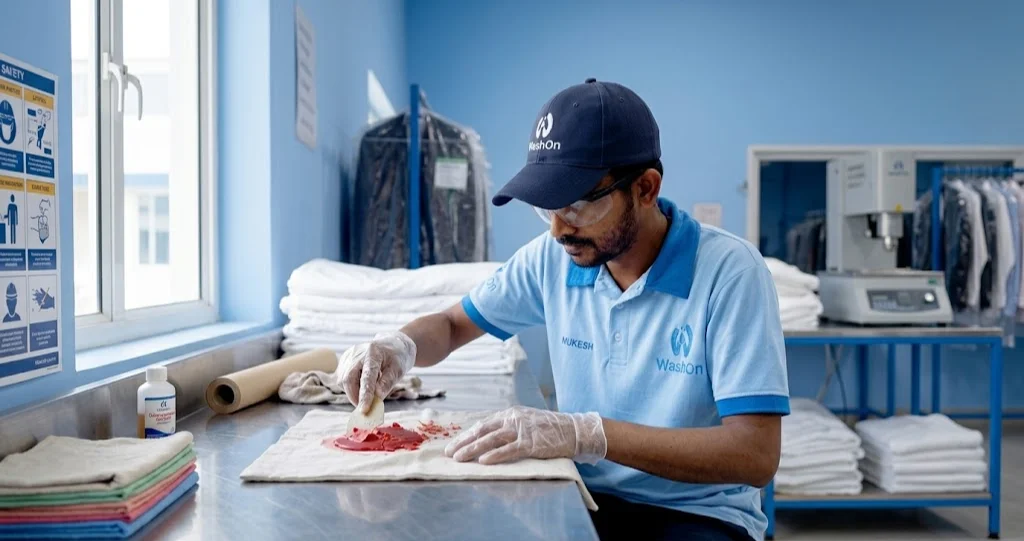
Step 2: Scrape Off the Excess. Using a dull edge, a butter knife, a plastic card, or a spoon, gently flake the hardened wax away from the fabric. Work from the outer edge of the stain inward, and scrape away from your body. On delicate weaves like chiffon or nida abaya fabric, skip the knife entirely and use a soft plastic edge instead, since sharp tools can snag or tear these materials.
Step 3: Lift the Rest With Heat. A thin layer of wax usually remains pressed into the fibres. For fabrics whose care label permits ironing, place plain white paper or another absorbent paper over the affected area and use the lowest suitable heat setting without steam. Press briefly and lift the iron rather than dragging it, replacing the paper as it absorbs the wax. Repeat until no more wax transfers.
For many cotton and linen garments, this low-heat method works well, provided the care label allows ironing. For silk and wool, avoid DIY heat treatment unless the garment's care instructions specifically permit it. After hardening and gently removing the surface wax, leave any remaining residue to a professional cleaner.
Step 4: Treat the Leftover Stain. Coloured or scented candles often leave a faint dye or oil mark even after the wax itself is gone. Dab a small amount of mild liquid detergent or a fabric safe stain remover onto the mark, let it sit for ten to fifteen minutes, then rinse or launder as the care label allows. Always spot test on a hidden seam first, especially on darker or printed fabric.
One rule matters more than any product: don't machine dry the item until you've confirmed in daylight that the stain is completely gone. Dryer heat can set remaining dye or oily residue and make the stain much harder to remove, and at that point, home remedies stop working.
Removing Wax and Fragrance Residue From Bukhoor or Oud Scented Candles
Candles with strong bukhoor or oud style fragrance blends can leave additional oily or fragrance residue alongside the wax. The removal steps are identical: harden, scrape, lift with heat, treat the mark, but expect the oil-based stain stage to need extra attention. For washable, colourfast fabrics, a small amount of mild degreasing detergent may help with the oily residue. Spot test first and follow the garment's care instructions.
Fabric by Fabric Guide: Cotton, Kandura, Abaya, Silk, and Wool
Not every fabric responds to heat and scraping the same way.
Cotton and many everyday kanduras can tolerate the full method when their care labels permit ironing and stain treatment. Because kanduras are usually white or pale, though, any leftover dye trace from coloured wax shows up immediately, so don't skip the stain treatment step even if the wax itself looks fully removed.
Abaya fabrics vary more than people expect. A cotton blend abaya can handle light ironing heat. Nida, chiffon, crepe, and satin are more sensitive to heat, and ironing them may cause scorching, distortion, or a permanent sheen mark depending on the fabric. For these, stick to freezing and gentle scraping only, then hand anything with visible residue to a professional. Our guide on how to clean an abaya at home covers general abaya care in more detail.
Silk and wool require extra caution. Avoid direct heat unless the care label specifically permits it. After hardening and gently removing the surface wax, leave any remaining residue to a professional cleaner. If a shadow remains, this is squarely dry cleaner territory.
Embellished abayas, anything with beadwork, embroidery, or lace trim, need the most caution of all. Scraping near stitching can catch and pull threads, and home stain removers can discolour delicate embellishment. When wax lands on a piece like this, minimal home intervention followed by professional cleaning protects the garment far better than a DIY attempt.
Mistakes That Turn a Small Wax Drip Into a Bigger Problem
A few habits consistently make wax stains worse rather than better.
Rubbing fresh wax the moment it lands pushes it deeper into the fibres instead of lifting it out. Using a hot iron or a hairdryer on high to 'speed things up' scorches the fabric before the wax fully melts, and scorch marks don't reverse. Drying the item before checking for leftover dye can set the remaining stain and make it significantly harder to remove. And treating a dry clean only fabric exactly like cotton, with direct ironing heat, is one of the fastest ways to damage a good abaya or a tailored piece.
When to Stop DIY and Call in Professional Care
Home remedies work well for simple problems: fresh wax, durable fabrics, and stains that are still mostly on the surface. Some cases are better handled by a professional to avoid further fabric damage.
Dry clean only labels, coloured wax dye that won't lift after one treatment, embellished or beaded abayas, and any fabric that already shows early scorching are all cases where continued DIY attempts risk doing more harm than the original wax stain. In these cases, professional cleaning is safer because the fabric can be assessed and the right method chosen, instead of relying on trial and error.
How WashOn Handles Wax and Stubborn Stains
WashOn has served more than 50,000 households across Dubai, and wax, dye, and oil based stains from bukhoor candles are a routine part of that work. WashOn handles the cleaning at its own Dubai facility rather than outsourcing it, which allows fabric-specific stain treatment for garments ranging from delicate abayas to embellished pieces.
For a fresh wax stain, the fastest path is simple: book a pickup through the WashOn app, website, or WhatsApp, subject to the service's current pickup terms. The garment is then collected, assessed, and treated by professionals experienced with these fabrics, depending on the service and garment.
wax stain packing?
Conclusion
Candle wax on fabric feels urgent, but it rarely needs urgency, it needs the right order of steps. Let it harden, scrape gently, lift the rest with careful heat, and treat any leftover mark before the item ever goes near a dryer. In Dubai's climate, keep an eye on bukhoor scented wax specifically, since its oil content needs a little extra stain treatment beyond the wax itself.
For everyday cotton and kanduras, this process is usually enough to handle at home. For silk, embellished abayas, or any dry clean only piece, professional care is the safer route, and it's exactly where WashOn's in-house Dubai facility fits in. Bag it, we'll grab it, and let the professionals take it from there.
Frequently Asked Questions
Can I remove candle wax from fabric without an iron?
Yes. Harden the wax with a wrapped ice pack, then gently scrape it away with a dull edge. For washable fabrics whose care label permits heat, follow the paper and iron method described above rather than a hairdryer, since it gives more control and less risk of overheating the fabric.
Does hot water remove candle wax from clothes?
No, and it can make things worse. Hot water can push wax deeper into fibres before it's had a chance to harden and lift away cleanly. Stick to the freeze and scrape method first.
How do I remove candle wax from a white kandura?
Freeze and scrape off the hardened wax, then use gentle iron heat between paper towels, since cotton kanduras tolerate this well. Because the fabric is pale, check closely for any leftover dye trace from coloured wax and treat it before washing, since it will show clearly if left behind.
Is bukhoor candle wax harder to remove than regular candle wax?
The wax itself can be removed using the same basic method, but bukhoor and oud scented candles may leave additional fragrance or oil residue that leaves a stronger residual mark. For washable, colourfast fabrics, a small amount of mild detergent or a fabric safe stain remover may help with the oily residue. Always spot test first and follow the care label.
Can candle wax stains be removed from silk or embellished abayas at home?
Light surface wax can often be safely frozen and scraped off. Anything beyond that, especially colour staining or wax near beadwork and embroidery, is safer left to professional dry cleaning to avoid damaging the fabric or trim.
What should I never do when removing candle wax from fabric?
Never rub fresh wax, use high heat to rush the process, or dry the item before confirming the stain is fully gone. These can spread the wax or set remaining dye and make the stain much harder to remove.