TL;DR
- •This blog is for Dubai residents who have wool sweaters, cardigans, or knitwear and want to clean them at home without causing them to shrink, felt, or lose their shape.
- •Wool can shrink during washing when heat, moisture, agitation, and friction cause the fibres to felt and contract. If you can control these factors, you can greatly reduce the risk of shrinkage and felting.
- •The safest way to clean a wool sweater at home is to wash it in cold water with a wool specific detergent, followed by a gentle press dry and flat lay finish.
- •Dubai has three risks that most care guides don't consider: hard water mineral buildup, fine desert dust that gets trapped in the knit, and moisture damage from humidity during storage.
- •If a sweater is cashmere or hand embroidered, or simply too valuable to risk washing at home, professional cleaning may be the safer option.
A wool sweater that comes out of the wash three sizes smaller is one of the most common and most avoidable laundry mistakes. The good news is that learning how to wash a wool sweater properly takes about twenty minutes of care, most of it just patience. This guide walks through the exact hand washing method that protects wool fibres, explains how to dry a wool sweater without warping its shape, and covers the Dubai specific conditions, from hard water to desert dust, that most care guides never mention.
Also Read:
Why Wool Sweaters Shrink in the First Place
Wool fibres are covered in microscopic scales, similar to shingles on a roof. When wool meets heat, moisture, and agitation all at once, those scales lock together permanently. This process is called felting, and once it happens, it cannot be undone.
That means shrinkage isn't caused by washing wool on its own. Shrinkage and felting are more likely when wool is exposed to a combination of factors:
- Hot water, which can make wool more vulnerable to felting, especially when combined with agitation and friction
- Agitation, from machine spinning, scrubbing, or wringing
- Sudden temperature swings between wash and rinse water
Reducing heat, agitation, and sudden temperature changes significantly lowers the risk of shrinkage and felting. This is the entire logic behind every safe method for how to wash a wool sweater at home.
How to Wash a Wool Sweater by Hand
Hand washing is generally one of the gentlest ways to clean wool because it allows you to keep agitation and friction to a minimum. Here's the method that protects fibres from felting.
Step 1: Check the label first. Some sweaters, particularly heavily blended or embellished ones, are dry clean only. If that's what the label says, don't take a chance, go straight to professional cleaning instead.
Step 2: Turn the sweater inside out before washing. This can help protect the outer surface from unnecessary rubbing while allowing detergent and water to reach areas such as the underarms.
Step 3: Fill a basin with cool or lukewarm water, ideally below 30°C. Avoid hot water, and try to keep the wash and rinse temperatures consistent. Pour in a little pH neutral wool detergent. Avoid regular laundry detergents where possible, as many are formulated for stronger fabrics and may be too alkaline or harsh for wool. Use a detergent specifically formulated for wool instead.
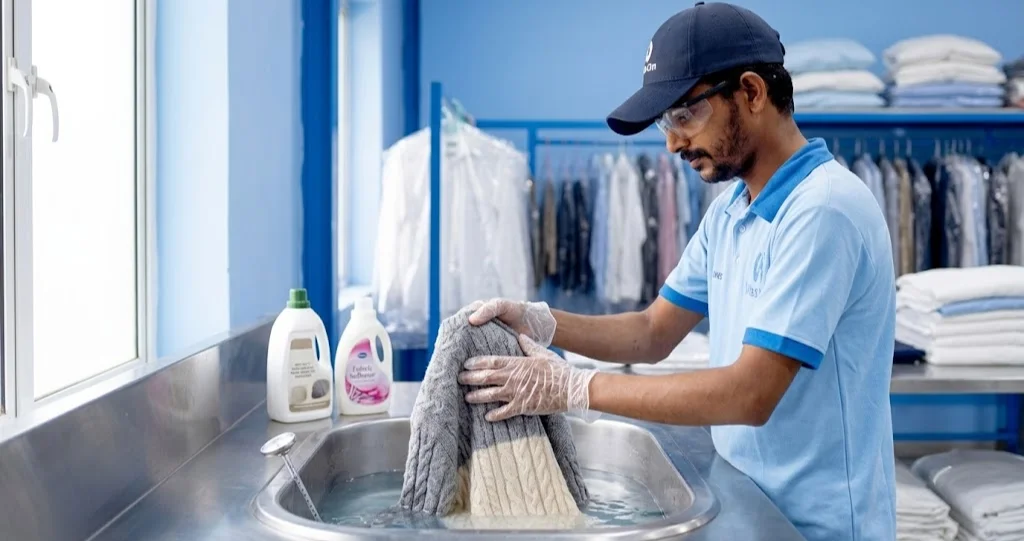
Step 4: Submerge and soak. Dip the sweater in the soap and water, pressing it into the solution until it is completely covered. Let it stand for 10 to 15 minutes. Avoid rubbing, twisting, or scrubbing. Let the detergent and water loosen dirt on their own.
Step 5: Rinse at the same temperature as the wash water. Drain and refill the basin with fresh water at roughly the same temperature. One of the quickest ways to cause felting is a sudden hot to cold or cold to hot change, and temperature consistency plays as much of a role as the washing itself.
Step 6: Squeeze out the water, don't wring. Support the sweater with both hands when lifting it from the basin. Wet wool is heavy and can stretch under its own weight. Instead of holding it up for long, support it from underneath and gently press out excess water against the side of the basin. Wringing or twisting can permanently stretch or distort the garment.
How to Dry a Wool Sweater Without Losing Its Shape
The right wash is just half the solution. Whether a wool sweater keeps its original size and shape depends heavily on how it is dried.
Don't hang a wet wool sweater. The weight of the water pulls the fibres downward, and over time this can permanently stretch the garment, especially at the shoulders and neckline.
Remove water using the towel roll method. Place the sweater on a clean dry towel so you can spread it out. Gently roll up the sweater in the towel. This extracts excess water without any of the wringing movement.
Place on a flat surface to continue drying. Lay a new dry towel on a flat surface in a place out of the sun or near heat vents. Straighten the sweater up, matching up seams and smoothing out sleeves. Allow it to air dry flat, turning it over once the first side is mostly dry so that both sides can dry evenly.
There's another factor that many generic laundry guides overlook: Dubai's climate can affect how wool behaves during storage and care.
Why Dubai's Climate Changes the Rules for Wool Care
Most advice on how to wash a wool sweater is written for temperate climates where the water is soft and the air is dry. Dubai is neither, and that changes the calculation in three specific ways.
Hard Water and Mineral Buildup
Water hardness can vary by water source and building. Repeated washing in hard water may leave mineral residue on the fibres, which can contribute to a stiffer or less supple feel over time, even when the washing method itself was correct. Using a wool safe detergent and rinsing thoroughly can help minimise residue buildup, although detergent alone does not necessarily remove hard water minerals.
Desert Dust in the Knit
Fine desert dust works its way into the open weave of knitwear more easily than it does into tighter fabrics like cotton. It's often invisible until a sweater is soaked in water, at which point trapped dust can settle unevenly across the fibres. A quick shake out and light brush before washing helps dust lift away rather than embed further during the wash cycle.
Heat to AC Cycling and Storage Humidity
Wool sweaters are often stored for long periods in air-conditioned rooms and enclosed wardrobes, where shifts in temperature and humidity can affect how the garment smells and feels. Poor ventilation and residual moisture can lead to musty odours or, in worse cases, mould and mildew, even months after a sweater was washed and dried correctly. Store wool completely dry in a clean, breathable fabric bag rather than a sealed plastic one.
None of these factors change the core washing method. They just mean wool sweater owners in Dubai need slightly more attention to rinsing thoroughly, storing wool completely dry, and choosing a suitable wool detergent than someone following a generic international guide.
When to Choose Professional Cleaning Instead
Hand washing at home works well for most wool sweaters, but some situations call for professional care instead:
- Cashmere or fine merino blends, where fibres are more delicate and less forgiving of small mistakes
- Heavily embroidered, beaded, or structurally lined knitwear
- Sweaters with visible stains that need targeted, fabric safe treatment before a full wash
- Any garment where the care label explicitly says dry clean only
This is where a local service you can trust comes in handy. WashOn offers professional garment cleaning in Dubai, with the cleaning method matched to the garment's care requirements. You can book a pickup through the app, website, or WhatsApp.
proper care?
Conclusion
The three factors that control the process of washing a wool sweater without shrinking are temperature, agitation, and consistency of wash and rinse. Wash the sweater by hand in cool water with a wool safe detergent, avoid wringing, and dry it flat away from direct heat. Pay attention to mineral residue from hard water in Dubai, brush off desert dust before washing, and between seasons keep wool completely dry to prevent the risk of humidity damage.
If a sweater is too valuable to risk or if it requires dry cleaning, WashOn provides professional garment cleaning in Dubai, with the cleaning method determined by the garment's care requirements. Make your pick-up appointments on the WashOn app, website, or WhatsApp and give your favourite knitwear the attention it deserves.
Frequently Asked Questions
Can I put a wool sweater in the washing machine?
Only if the care label allows it. If it does, use a wool or delicate cycle, cold water, and a mesh laundry bag to minimise agitation. Hand washing is generally the safer option when you want to minimise the risk of shrinkage.
How long does it take to dry a wool sweater properly?
Air drying flat typically takes 24 to 48 hours, depending on the thickness of the knit and humidity levels in the room. Flipping the sweater once the underside feels dry helps it finish evenly on both sides.
Is it okay to use regular laundry detergent on wool?
It's best avoided. Regular detergents are often alkaline and can gradually damage wool's protective fibre scales. A pH neutral, wool specific detergent keeps fibres intact over repeated washes.
Why does my wool sweater feel stiffer after washing it a few times in Dubai?
Mineral residue from hard water can contribute to a stiffer feel, although detergent residue, washing conditions, and fibre damage can also play a role. Using a wool formulated detergent and rinsing thoroughly helps reduce this effect over time.
Can a shrunk wool sweater be fixed?
Mild shrinkage can sometimes be partially reversed by soaking the sweater in lukewarm water and gently reshaping it while damp. Some home methods use a small amount of hair conditioner, but results vary and the technique can affect delicate fibres.
How often should a wool sweater actually be washed?
Wool is naturally odour resistant, so many sweaters can be worn several times between washes. Wash them when they develop noticeable odour, stains, or buildup, while following the care label. Airing the sweater out overnight between wears and spot cleaning small marks reduces unnecessary washing and extends the garment's life.