TL;DR
- •This article is for busy people in Dubai, including working professionals and parents, who need practical ways to remove coffee stains from clothes without damaging the fabric.
- •Coffee contains tannins that cling to fabric, and heat, time and friction make the stain harder to remove.
- •Blot the stain first, rinse it with cold water, then pretreat it with liquid detergent or a suitable stain remover before washing.
- •This guide covers fresh and dried coffee stains, white shirts, milk-based coffee spills and delicate fabrics.
- •If the garment is expensive, delicate, dry clean only, or still stained after two home treatments, consider professional cleaning.
Also Read
Coffee stains come out best when you treat them promptly, because the tannins in coffee bind to fibres while the stain is still wet. Fresh stains usually lift with cold water and detergent. Dried stains need soaking and pretreatment first, and they take more patience.
Acting quickly matters, but the method matters just as much. Rubbing, using the wrong heat and tumble-drying a stained garment can all make a coffee stain harder to remove. On white clothing, including kanduras and work shirts, even a small spill is very visible.
This guide explains how to remove coffee stains from white shirts, treat dried spills and clean garments stained by coffee with milk or sugar. It also covers fabric-specific precautions and when professional laundry or dry cleaning is the better option.
Why Do Coffee Stains Stick to Clothes So Stubbornly?
Coffee contains tannins and other compounds that adhere to textile fibres and leave visible marks. The colour problem is mostly linked to black coffee. Milk, cream and sugar add protein and sugars, which can make the stain harder to remove.
A cup of coffee does not have to leave a permanent mark if you handle it the right way. Stains are easiest to remove when fresh. They get harder once they dry, get rubbed deeper into the fibres, or meet heat before the stain is gone. The result also depends on the fabric and what was in the drink.
Three things decide the outcome:
- Time: a wet stain can be flushed out, while a dried stain has to be loosened first.
- Temperature: cold water dilutes tannins, while heat fixes them in place.
- Fabric: cotton releases coffee fairly easily, while wool and silk need gentler handling.
What Should You Do in the First Five Minutes?
A fresh coffee stain responds well to a simple routine. Follow these steps in order.
- Blot, do not rub. Press a clean, absorbent cloth or paper towel on the stain to lift away excess coffee. Rubbing spreads the stain and pushes it further into the fibres.
- Rinse from the back. Hold the stained area under cool running water with the back of the fabric facing the stream. This pushes the coffee out of the fibres instead of deeper into them.
- Pretreat. Apply a small amount of liquid laundry detergent to the stain and leave it for the time on the product label. Use dishwashing liquid only if it suits the fabric and the product instructions allow it.
- Add white vinegar if needed. For a suitable washable fabric, you can try a small amount of diluted white vinegar after pretreatment. Check the care label and test a hidden area first.
- Wash. Wash the garment according to its care label, using a suitable detergent and the recommended water temperature.
- Check before drying. Look at the stain in good light. Repeat if there is still a shadow. A stain that goes through the dryer is much harder to remove.
If a spill happens at work or in the car, blotting and a cold water rinse are enough to hold the stain until you get home.
How Do You Get a Coffee Stain Out of a White Shirt?
Coffee stains are especially noticeable on white shirts, so treat them as soon as possible.
Start with the blot, cold rinse and detergent routine above. If a stain remains, soak the shirt in cold water with an enzyme-based detergent for 30 minutes. For tough stains on white fabric, an oxygen-based bleach is a better choice than chlorine bleach, which can discolour some materials.
Focus on the stained area first. You do not need to soak the whole shirt unless the stain is widespread and the care label permits soaking. Test every product on a hidden seam first, because stretch and polyester-blend shirts can react differently from pure cotton. For more on whites, see our guide to removing stains from white clothes.
How Do You Remove an Old or Dried Coffee Stain?
An old coffee stain is harder but not hopeless. The goal is to rehydrate the stain before treating it.
- Soak in cold water for at least 30 minutes. This loosens the dried tannins.
- Pretreat. Apply a suitable liquid laundry detergent or fabric-safe stain remover to the dried stain, following the product instructions. Work it in gently if the fabric permits.
- Leave it to work for 20 to 30 minutes. For heavy stains, soaking for several hours in an enzyme solution helps.
- Rinse and wash at the temperature on the care label.
- Air dry and inspect. Repeat the soak if a faint outline remains.
Several short treatments usually work better than one aggressive attempt. Stronger products and hotter water on a dried stain are the quickest way to damage colour and fabric.
What If the Coffee Had Milk or Sugar?
Latte, flat white and karak chai stains differ from a cup of black coffee. Milk adds protein, and sugars can darken or caramelise when heated, for example under an iron.
- Rinse with cold water first. Hot water can set milk proteins and make the stain harder to remove.
- Use an enzyme cleaner, which breaks down protein.
- Add a few drops of dish detergent while you clean, to cut through grease.
- Do not iron or tumble dry until the stain is gone. Leftover sugar can turn dark when heated.
How Should You Treat Coffee Stains on Different Fabrics?
The care label sets your limits. Use this as a quick guide.
- Cotton and linen: very forgiving, and generally tolerant of standard laundry detergent. Still follow the care label, and test stain removers on coloured or printed fabrics first.
- Polyester and synthetic blends: usually fine with standard detergent, but check the label before using stronger stain removers or heat. A cold rinse followed by an enzyme cleaner works well. High heat can set the stain.
- Wool and silk: these protein fibres can be damaged by enzyme detergents or strong chemicals. Blot, rinse gently with cold water and avoid rubbing. For anything valuable, professional cleaning is the safer choice.
- Kandura and thobe: treat white cotton kanduras by the care label. For a fresh stain, blot and rinse with cool water before using a suitable detergent. A kandura shows every mark because of its size, so do not scrub, which can leave an uneven patch or damage the texture. Some expensive kanduras are best left to a professional.
Which Home Remedies Work, and Which Do Not?
Home remedies are popular, but they are not all equal.
- Cold water rinse: best on fresh stains, and always the first step.
- Dish soap and white vinegar: fresh and mild dried stains. Test on coloured fabric first.
- Enzyme laundry detergent: fresh, dried and milk coffee stains. The strongest everyday option.
- Oxygen bleach: white and colourfast fabrics. Avoid on wool and silk.
- Baking soda or salt: fresh spills only. Mild, and mostly absorbs liquid.
- Hot or boiling water: rarely recommended, because it can set stains on many fabrics.
Vinegar on its own does not dissolve tannins very well. It works better as a partner to detergent than as a standalone fix.
What Mistakes Make Coffee Stains Permanent?
Most permanent coffee stains come from avoidable errors:
- Rubbing the stain. It spreads the coffee and damages fibres.
- Using hot water first. Heat fixes tannins in the fabric.
- Using the dryer too early. Dryer heat locks in whatever stain is left.
- Waiting days. The longer coffee dries, the more it bonds with the fibres.
- Skipping the care label. Some fabrics cannot take vinegar, bleach or warm water.
- Mixing products. Combining bleach with vinegar or other cleaners can release harmful fumes and damage fabric.
Why Do Coffee Stains Set Faster in Dubai?
In Dubai's heat, spilled coffee can dry quickly, especially outdoors or inside a hot car. Once a stain dries it becomes harder to remove, so blot it promptly and treat it as soon as practical.
Coffee and karak spills are especially noticeable on white kanduras and work shirts. Blot the spill and rinse the area with cool water where the fabric allows. Water hardness can affect laundry results in some areas, but pretreatment and following the detergent instructions still matter most.
The practical advice is simple: treat coffee stains as soon as you can. If you are away from home, blot the spill with a clean cloth and use a stain pen only if it suits the fabric. Do not leave stained clothes in a hot car, and do not put them in a dryer before checking the stain is gone.
When Should You Hand a Coffee Stained Garment to a Professional?
Home methods suit everyday clothes like t-shirts and cotton garments. Some cases are better handled by a specialist:
- The label says dry clean only, or the garment is delicate.
- The item is silk, wool, a suit or another expensive or delicate piece.
- The stain is large or old and has survived two home treatments.
- You are not sure what the stain contains, such as coffee mixed with milk, syrup or other drinks.
- The stain has already been through a dryer.
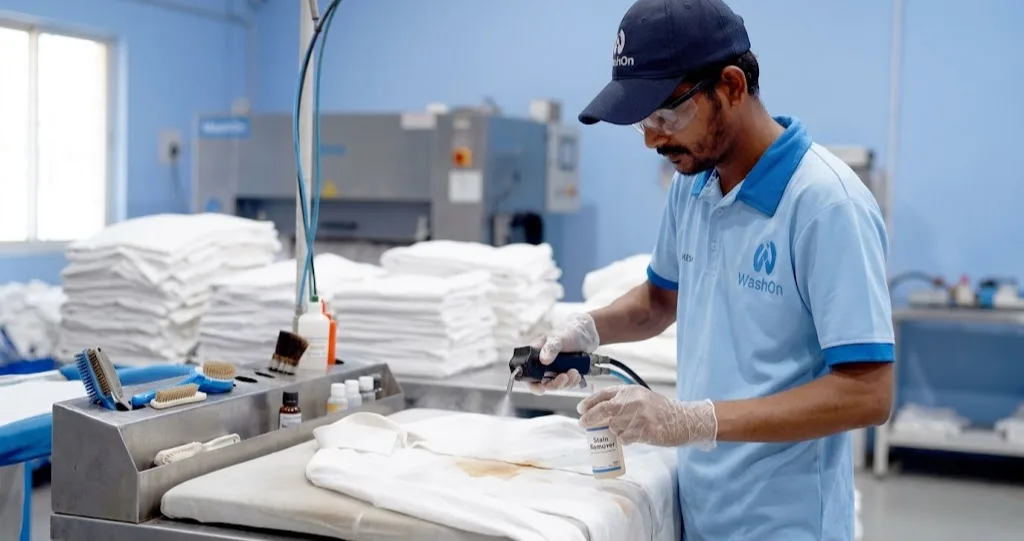
WashOn is a laundry and dry cleaning service in Dubai that has served over 50,000 households and holds a 4.9-star rating. Garments are cleaned at WashOn's own Dubai facility and are never outsourced. Pickup and delivery are free, and standard laundry is returned within 24 hours. You can book through the website, mobile app or WhatsApp, so you do not have to interrupt your day to deal with a stained shirt or kandura.
Related services: professional dry cleaning service, wash and press service and ironing and steam press service.
What Is the Fastest Way to Save a Coffee Stained Shirt?
The quickest and most reliable method is simple:
- Blot the spill immediately, then rinse the back of the stain with cool water.
- Pretreat with an enzyme detergent, or dish soap with white vinegar, before washing.
- Use oxygen bleach on white or colourfast clothes only.
- Soak a dried stain in cold water before applying enzymes.
- Do not dry the garment until the stain is completely gone.
These methods work well for everyday spills. For delicate or expensive clothes, or a stubborn stain that will not lift, ask a professional.
Frequently Asked Questions
Does coffee stain clothes permanently?
No, not if it is treated promptly. Coffee is a tannin stain that usually lifts with cold water and detergent when fresh. It becomes permanent mainly when it is exposed to heat, rubbed into the fabric, or left for days before treatment.
What is the best way to get a coffee stain out of clothes?
Blot the stain, rinse it from the back with cold water, and pretreat with an enzyme detergent or a mix of dish soap and white vinegar. Then wash according to the care label and check the stain before drying.
Can you remove a dried coffee stain from clothes?
Yes, in most cases. Soak the garment in cold water for 30 minutes, apply enzyme detergent or stain remover, leave it to work, and wash again. Repeat the soak if a faint mark remains, rather than switching to hot water or strong chemicals.
How do you remove a coffee stain from a white shirt?
Use the standard blot, cold rinse and detergent routine first. If a tint remains, soak in cold water with an enzyme detergent, then try an oxygen bleach if the care label allows it. Test on a hidden area before treating the visible stain.
Is vinegar good for coffee stain removal on clothes?
Vinegar helps when combined with dish soap or detergent, because it assists in loosening tannins. On its own it is less effective, and it should be tested on coloured fabrics first.
Should I take a coffee stained garment to a dry cleaner?
Yes, if the garment is dry clean only, delicate, expensive, or still stained after two home treatments. A professional service can treat the fabric safely, and WashOn offers free pickup and delivery across Dubai, so you do not need a trip to the shop.