TL;DR
- •This blog is for busy professionals, families, and abaya and kandura wearers in Dubai who have spilled nail polish on clothes and want it out without damaging fabric.
- •Nail polish dries into a hard film inside fibres, so speed, blotting instead of rubbing, and the right solvent matter more than any single trick.
- •Acetone may be suitable for some cotton, linen and denim garments after a hidden-area colourfastness test. For polyester and nylon, a non-acetone remover may be a safer starting point, but the care label and fabric construction should always be checked first.
- •Avoid dryers, ironing and strong heat until the stain is gone, as heat can make remaining residue harder to remove.
- •For delicate or expensive garments, cured gel polish, or a stain that survives two attempts, professional cleaning is the safer route. WashOn offers pickup and delivery for laundry and dry-cleaning services in Dubai.
Also Read
Nail polish is one of the hardest stains to remove from clothes because it is designed to dry into a hard, durable film. Learning how to remove nail polish from clothes comes down to three decisions: how fast the spill is treated, which solvent suits the fabric, and whether the garment should be handled at home at all.
Nail polish is made of pigments and resins held in fast-evaporating solvents. Once the solvents evaporate, the lacquer hardens inside the weave and bonds to the fibres. That is why a spill that looks minor on a cotton shirt can turn permanent after a single trip through a hot dryer.
Dubai adds its own variables. Wardrobes here mix cotton kanduras, lightweight abayas, work shirts, school uniforms and delicate evening wear, and each of these reacts differently to solvents. Summer heat also dries polish quickly, which shortens the window for easy removal.
This guide explains how to get nail polish out of clothes by fabric type, covers dried, gel and glitter polish, and shows when handing garments to a professional is better.
Why Is Nail Polish So Hard to Get Out of Clothes?
Many common laundry stains are water-based or oily, while nail polish contains film-forming resins, pigments and solvents. Once it dries, detergent alone is generally not enough to break down the hardened coating. It is a plastic-like coating that detergent alone cannot dissolve, so it needs a solvent first.
That creates a central problem. The solvent that dissolves polish best, acetone, can also bleach dye, leave an oily ring or melt certain fibres. Every method below is a balance between dissolving polish and protecting fabric.
What Should You Do in the First Five Minutes?
Fresh polish is far easier to remove than dry polish, so the first few minutes decide the outcome.
- Blot, do not rub. Rubbing pushes polish deeper and spreads it into a larger mark.
- Lift excess with a paper towel. Lay it lightly on top and let it absorb. Do not press hard.
- Slide a cloth under the stain. This stops polish soaking through the back of the garment or onto the table.
- Keep it away from heat. No dryer, no iron, no hanging in direct sun.
Then read the care label before reaching for any remover.
Which Remover Is Safe for Your Fabric?
Fabric type decides the method more than anything else. The table below is a quick reference, with notes after it explaining the reasoning.
- Cotton, linen, denim: acetone-based remover is usually the best first option. Avoid heat before the stain is gone.
- Polyester, nylon, spandex: a non-acetone remover or rubbing alcohol is a safer first option. Avoid pure acetone without a test.
- Rayon, wool: test a non-acetone remover on a hidden seam, or go to a professional. Avoid acetone.
- Silk: professional dry cleaning. Avoid any household solvent.
- Acetate, triacetate, modacrylic: professional dry cleaning. Avoid all nail polish removers.
- Dry clean only labels: professional dry cleaning. Avoid home solvents.
Acetone generally does not dissolve the cellulose fibres in cotton and linen, but it can still affect dyes, finishes or blended fibres. It can bleach or strip dye, so a hidden seam test is always worth thirty seconds.
On acetate, triacetate and modacrylic, acetone does more than stain. It can dissolve the fabric, leaving a hole or a melted patch where the polish used to be. If the label lists any of these, skip remover entirely.
How Do You Get Nail Polish Out of Clothes Step by Step?
This method suits washable cotton, linen, denim and, with the right remover, synthetics.
- Remove excess. Blot wet polish. For dry polish, see the next section.
- Test remover. Dab a hidden seam or inner hem, wait a minute, and check for colour change or distortion.
- Protect the surface below. Place a clean white cloth or folded paper towel under the stain.
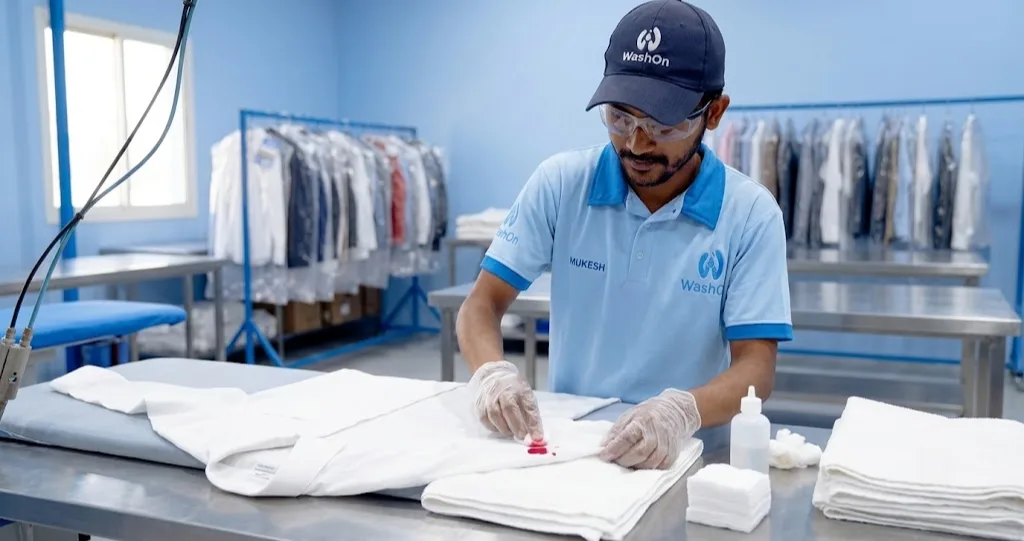
- Dab from the back. Dampen a cotton swab or white cloth with remover and work from the outside of the stain towards the centre. Dabbing from the reverse side pushes polish out of the fabric instead of through it.
- Swap cloth often. Dissolved polish transfers to the cloth. A dirty cloth puts it straight back.
- Pretreat with detergent. Once most of the polish has lifted, gently work a small amount into the area to help remove remaining residue. Use dish soap only when appropriate for the fabric.
- Rinse and wash. Wash at the warmest temperature the label allows.
- Check before drying. If any tint remains, repeat the steps. Drying locks in whatever is left.
Work near an open window or in a ventilated room. Acetone fumes are strong and acetone is flammable, so keep it away from flames and hot appliances.
If a faint pigment remains after treatment, avoid adding another chemical unless the fabric and care label clearly allow it. For white or delicate garments, professional treatment is safer.
How Do You Remove Dried Nail Polish From Clothes?
Dried polish is brittle, and that works in your favour. The aim is to remove as much of the raised film as possible before any liquid touches it.
If the dried polish forms a raised layer, gently lift or scrape away loose material with a spoon or other blunt edge. Do not force anything that is firmly attached to the fibres. Then treat the remaining stain according to the fabric type.
Once the surface film is gone, follow the same solvent steps above to dissolve what has soaked into the weave. Expect dried polish to need a second round.
How Do You Remove Gel Nail Polish and Glitter Polish From Clothes?
Gel polish behaves differently depending on its state.
Uncured gel has not been set under a lamp. Contain it quickly, lift raised product without spreading it, and then use a remover method that suits the fabric.
Cured gel has hardened into a bonded film. Only loose, raised material should be removed, and only if it releases without resistance. Forcing it can stretch or tear fibres.
Gel is the hardest nail product to shift. Even on skin, it usually needs a prolonged acetone soak. On clothing, that is rarely practical, so cured gel on anything delicate is best left to a professional.
For glitter polish, remove loose flakes first, then consider an appropriate remover only after checking the care label and testing it on a hidden area. Glitter particles can lodge in the weave, so blot with a fresh section of cloth each time rather than wiping.
Do Home Remedies Like Hairspray, Toothpaste and Baking Soda Work?
Many guides list household substitutes. Results are mixed, and some are not worth the risk of setting stains.
- Rubbing alcohol may help with some nail-polish residues, but its effectiveness varies by formulation and fabric. Test it on a hidden area first.
- Liquid dish soap or laundry detergent: useful as a follow-up to clear residue, not as the main stain remover.
- Baking soda: a low-cost option that is less effective than a good detergent.
- Toothpaste: works on nails, but it is not efficient on fabric.
- Hairspray: often suggested for its alcohol content, but modern formulas vary and results are unreliable.
If a home remedy is going to be tried, test it on a hidden area and stop if the stain spreads.
What Mistakes Make Nail Polish Stains Permanent?
Most permanent polish stains come from a short list of avoidable errors.
- Rubbing instead of dabbing.
- Skipping the care label and using acetone on acetate or triacetate.
- Putting the garment in the dryer before the stain is fully gone.
- Using one dirty cloth for the whole job, which re-deposits dissolved polish.
- Over-soaking the area, which spreads the stain into a wider ring.
- Waiting days before treating a spill that could have been handled in minutes.
Can You Remove Nail Polish From an Abaya, Kandura or Other Delicate Garment?
Sometimes, but the risk is higher and the margin for error is smaller.
A cotton kandura may be less vulnerable to solvent damage than delicate fabrics, but acetone can still affect dyes or finishes, so a hidden-area test is important. Abayas vary widely. Some are made from synthetic blends and others from fine crepe, chiffon or satin, and embellishments such as beading or embroidery add further risk. A solvent that is fine on the fabric may loosen glue, dull threadwork or leave a visible patch.
For silk, satin, chiffon, embellished pieces and anything with sentimental or high value, professional cleaning is a sensible choice. If a delicate garment has already been treated at home with no success, stop and avoid adding more products. Extra layers of remover make the job harder for a specialist.
When Should You Hand a Nail Polish Stain to a Professional?
A professional clean is the better route when any of these apply:
- The label says dry clean only.
- The fabric is silk, acetate, triacetate, modacrylic or an unknown blend.
- The garment is expensive, embellished, lined or hard to replace.
- The polish is cured gel or a large, dried spill.
- The stain remains after two careful attempts.
Professionals have access to dry-cleaning solvents and fabric-specific processes that are not available over the counter. Tell the cleaner what the stain is, and bring a bottle if you still have it, so they know which solvents the polish contains.
How Does WashOn Help With Nail Polish Stains on Clothes?
Home methods work well for sturdy cotton and denim. For everything else, WashOn offers a lower-risk option.
WashOn cleans garments at its own in-house facility in Dubai and never outsources them. That means the person handling your garment works within the same team from pickup to return. Pickup and delivery are free, and standard laundry is turned around in 24 hours.
More than 50,000 households use WashOn, and customers have given the service a 4.9-star rating. Dry cleaning is available for delicate and dry clean only pieces, so a silk blouse, a formal abaya or a suit jacket does not have to be treated with a bottle from the bathroom cabinet.
For the best chance of a good result:
- Do not apply more remover once you decide to hand the garment over.
- Point out the stain and type of polish when you book.
- Do not wash or dry the item first.
Booking takes a few minutes through the website, mobile app or WhatsApp.
Which Approach Is Right Next Time Nail Polish Spills?
The decision is simpler than it first appears.
- Act fast and blot. Never rub, and keep garments away from heat.
- Check the label first. The fabric decides whether acetone is safe.
- Use a fabric-appropriate remover only after checking the care label and testing a hidden area. Acetone may work on some cotton, linen and denim garments, while non-acetone products may be a safer starting point for some synthetics.
- Finish with detergent and check before drying. Repeat if any tint remains.
- Hand over delicate, valuable or cured gel stains. Fewer attempts at home usually means a better final result.
Knowing how to treat nail polish stains can save many garments, while knowing when to stop can prevent further damage. When a stain is on something that matters, WashOn can take it from here. Schedule a pickup with WashOn for laundry and dry-cleaning services in its available Dubai service areas through the website, app or WhatsApp.
Frequently Asked Questions
Does nail polish come out of clothes?
Yes, in many cases. Fresh polish on cotton, linen or denim often comes out completely when treated quickly with a suitable remover. Dried polish, cured gel and delicate fabrics are harder, and they carry a higher risk of leaving a faint mark.
Does nail polish remover stain clothes?
It can. Acetone may bleach or strip dye, and some removers leave an oily ring on fabric. Testing on a hidden seam and following with detergent reduces risk, and acetone should never go on acetate or triacetate.
How do you remove nail polish from clothes without acetone?
Use a non-acetone remover or rubbing alcohol and dab from the back of the stain. It works more slowly, so expect to repeat the process, but it is gentler on polyester, nylon and other synthetics.
How do you get dried nail polish out of clothes?
If the dried polish forms a raised layer, gently lift loose material with a blunt edge, then treat the remaining residue with a fabric-appropriate remover.
Can I use acetone on all fabrics?
No. Acetone may be suitable for some cotton, linen and denim garments after a hidden-area test, but it can damage acetate, triacetate, modacrylic, some synthetics and delicate fabrics such as silk and wool. Always read the care label and test first.
Will washing alone remove nail polish?
Washing alone rarely removes it, because detergent cannot dissolve dried film. The polish needs a solvent first, and drying a stained garment can set the mark permanently.