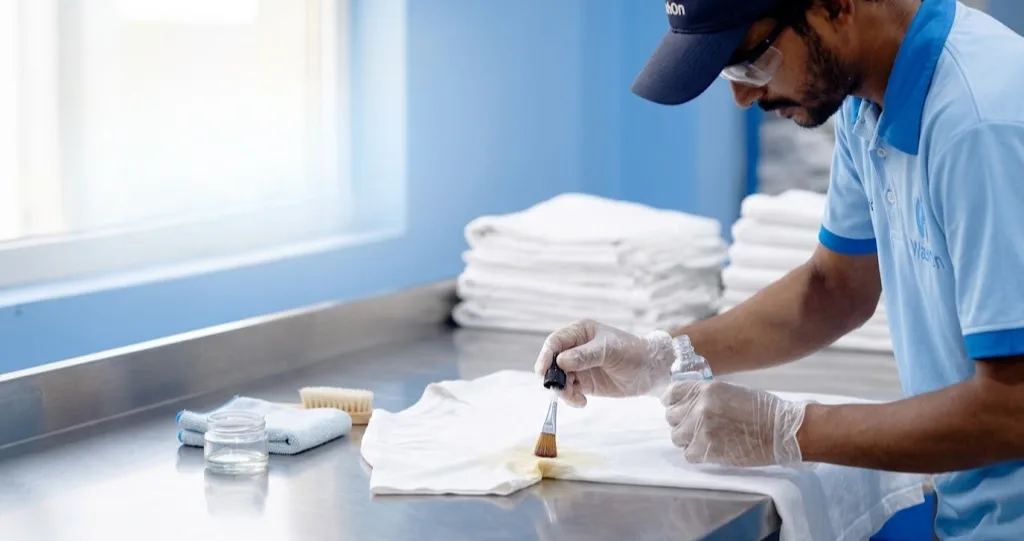
TL;DR
- •This guide is for people in Dubai who want to know how to remove sweat stains from clothes, and when professional cleaning is the safer choice.
- •Underarms and collars can turn yellow because aluminium salts in antiperspirants react with sweat, skin oils, and other residue on the fabric.
- •Stains can be treated with cold water, quick pre-treatment, and a baking soda and hydrogen peroxide paste on white cotton, or a vinegar soak on coloured clothes.
- •Avoid hot water, the dryer, chlorine bleach, and fabric softener while a sweat stain is still visible. Heat and some products can make the stain harder to remove.
- •Silk, wool, and special-occasion garments are better left to a professional cleaner. WashOn offers free pickup and delivery across Dubai.
Also Read:
The first step to getting rid of sweat stains is understanding what they are. Sweat is mostly water and salt. The yellowish marks under the arms and around the collar come from a mix of sweat, body oils, skin residue, and antiperspirant ingredients, including aluminium salts. These marks become more noticeable with repeated wear.
This can happen more quickly in Dubai's hot climate, where increased sweating can leave more moisture, body oils, and antiperspirant residue on clothing. A shirt left in the laundry basket until the weekend gives the stain days to set.
Most sweat stains can be treated at home, as long as you choose a method that suits the stain's age, the fabric type, and the colour. This guide covers the causes of sweat stains, how to treat them while they are fresh, common mistakes that make them harder to remove, how to prevent them in Dubai's climate, and when to seek professional cleaning.
Why Do Sweat Stains Form on Clothes?
Fresh sweat on a shirt is usually not very visible, because it is largely water and can rinse away easily. Sweat mixes with skin oils, bacteria, dirt, and antiperspirant to form a sticky residue that clings to the fibres.
Yellow stains usually have several causes. Antiperspirants contain aluminium salts that interact with sweat, skin oils, and other residue, which builds up as yellow on fabric. Repeated wear without adequate washing can allow sweat and antiperspirant residue to build up, making stains more noticeable and potentially harder to remove. If antiperspirant has not dried before you dress, the problem gets worse.
On dark clothes, the problem is often stiff, chalky white marks. These are product residues left on the fabric, and a diluted vinegar rinse usually works better than bleach.
Heat and humidity make all of this worse. Salt and residue can leave visible rings around collars, underarms, and other areas where sweat collects.
What Do You Need Before You Start?
Gather these before treating any stain:
- White vinegar
- Baking soda
- 3% hydrogen peroxide
- Liquid dish soap
- An enzyme-based liquid detergent or an oxygen bleach
- A soft toothbrush
Test your treatment on a hidden area first to check for colour fading or fabric damage. Follow the care label, and use cool or cold water unless the label says otherwise.
Never mix vinegar and hydrogen peroxide in the same container. If you use both, apply them separately and rinse the fabric thoroughly in between.
How Do You Remove Fresh Sweat Stains From Clothes?
Treating a stain soon after it forms can make removal easier and may reduce the need for repeated treatment. Stain removal is easier when fresh, so do not wait until laundry day.
- Turn the shirt inside out and rinse the stained area with cool running water from the back of the fabric.
- Apply an enzyme-based liquid cleaner to the stain and rub it gently with a soft bristle brush.
- Leave it for 15 to 30 minutes.
- Wash the garment according to its care label.
- Inspect the garment after washing, while it is still damp. If the stain remains, repeat the treatment before drying. Air-dry the garment once the stain has been removed.
How Do You Remove Sweat Stains From White Shirts?
Yellow sweat stains on white shirts need more than detergent. Two household treatments work well on cotton and cotton blends. Try one first, and move to the second only if the first leaves a trace.
Baking soda and hydrogen peroxide paste
Mix baking soda with a small amount of 3% hydrogen peroxide and water into a loose paste. Add a few drops of dish soap for cleaning. For suitable white, colourfast fabrics, apply a small amount of the paste to the stain and leave it for a short period, following your fabric care guidance, then rinse thoroughly. Hydrogen peroxide can help break down and lighten some organic stains, while baking soda provides mild abrasive action that helps lift residue.
White vinegar soak
Mix one part white vinegar with two parts cool water and soak the stained area for 30 to 60 minutes. Diluted vinegar may help loosen some deodorant residue and buildup on suitable washable fabrics. Rinse well and wash.
Oxygen bleach for stubborn marks
If a stain is old and still visible after two washes, and the care label permits it, use an oxygen-based stain remover according to the product's instructions. Avoid chlorine bleach, since it can sometimes react with sweat and other residue and make the yellowing more obvious. Oxygen bleach is usually the better choice when the care label allows it.
Older stains may need more than one treatment. Repeating a gentle treatment is better than using an aggressive method that could damage the fabric.
How Do You Get Sweat Stains Out of Coloured Clothes?
Coloured and printed fabrics need gentler handling, because hydrogen peroxide and lemon juice can fade dyes.
For suitable washable coloured fabrics, a diluted vinegar treatment may help loosen some deodorant residue. Follow it with washing according to the care label. If the stain remains, make a paste of baking soda and water, rub it gently into the stain, leave it for 20 minutes, and rinse. Test any treatment on a hidden area first.
Black clothes with white deodorant marks need a different approach. Dilute white vinegar with water and rinse the affected area before washing. Avoid dry scrubbing, which spreads the residue across the fabric.
Which Fabrics Need Extra Care?
The fibre decides which method is safe. Treating every fabric like cotton is how a stain ends up damaging the garment.
- Linen and cotton: generally easier to treat, but always check the care label first.
- Polyester: common in sportswear because it dries fast, but it can hold onto sweat and odour. An enzyme-based detergent helps break down the organic residue. Follow the label for the right wash temperature.
- Silk and wool: avoid hydrogen peroxide, baking soda paste, vinegar soaks, and hot water unless the label specifically allows them. These are delicate protein-based fibres, so follow the label and use professional cleaning where recommended.
- Cotton and cotton-blend kanduras: sweat marks often show around the collar, cuffs, and underarms. For starched, embroidered, or delicate kanduras, follow the label and consider professional cleaning if the stain is hard to shift.
What About Sweat Stains on Hats, Sheets, and Pillowcases?
Sweat stains can also develop on items that come into regular contact with the body, such as hats, sheets, and pillowcases. Caps and hats can be spot-cleaned with a baking soda and peroxide paste, brushed on lightly, then rinsed by hand in cold water and dried flat. Structured caps should not go through a washer or dryer.
Pillowcases and sheets collect sweat, body oils, and skincare products while you sleep. Pre-treat stains, then wash with an enzyme-based detergent or an oxygen bleach, following the label. In Dubai's summer, regular cleaning helps stop stains from setting in linen.
What Mistakes Make Sweat Stains Worse?
Most permanent sweat stains come from avoidable mistakes:
- Hot water: heat can set protein-based residue into the fabric, making the stain harder to remove.
- Drying too soon: check the garment before it goes in the dryer. Heat can set any remaining stain.
- Chlorine bleach: can sometimes make yellow staining more noticeable and may weaken cotton fibres with repeated or improper use.
- Fabric softener: can leave a residue that clings to the fabric and attracts more buildup.
- Leaving residue too long: the longer sweat and product stay on the fabric, the harder they are to remove.
- Heavy antiperspirant use: excess product leaves more residue, which increases visible underarm buildup.
How Can You Prevent Sweat Stains in Dubai's Heat?
Preventing a stain is easier than removing one. A few habits make a real difference.
- Let antiperspirant dry before you dress. Wet product transferring onto fabric is one of the factors that can contribute to yellow buildup.
- Consider an aluminium-free deodorant if staining is a concern. It may reduce residue associated with aluminium salts, although it will not prevent sweating.
- Wear breathable fabrics. Choose cotton and linen over tight synthetics. Under a dress shirt, a light cotton undershirt absorbs moisture before it reaches the outer layer.
- Do not leave worn clothes in a closed, damp basket for days. Pre-treat sweaty areas the same evening, and wash within a day or two during the hottest months.
- Store clean clothes in breathable garment bags, not sealed plastic, especially in humid weather. Airflow helps stop moisture building up in storage.
When Should You Send Sweat-Stained Clothes to a Professional?
Home methods work well on everyday cotton, but some garments are not worth the risk. A professional clean makes sense when:
- The fabric is silk, wool, satin, or labelled dry clean only
- The garment is a suit, a formal kandura, or a special-occasion outfit
- The stain has survived two or three careful home treatments
- The stain has changed the colour of the fabric
- You do not have time to treat, soak, and re-wash
Professional cleaners can assess the fibre, the dye, and the age of the stain before choosing a treatment, which takes the guesswork out of it.
How Does WashOn Help With Sweat-Stained Clothes?
WashOn is a laundry and dry cleaning service in Dubai built around convenience. Pack your clothes and book a pickup, and the team collects them from your door. WashOn processes laundry at its own Dubai facility rather than sending it to third-party providers. Standard laundry service is returned within 24 hours, with pickup and delivery available at no extra charge.
Wash-and-fold and wash-and-press suit everyday garments and activewear. Dry cleaning provides professional treatment for delicate fabrics, formal clothing, and items where other home treatments failed. Point out any stained garments when handing them over so the cleaning team knows which areas require attention.
WashOn serves customers across Dubai, including more than 50,000 households, and has a 4.9-star rating. You can book on the website, the mobile app, or WhatsApp.
Which Method Should You Use to Clear Sweat Stains for Good?
A few points cover most situations:
- Early treatment is important. Start with cool or cold water unless the garment's care label recommends otherwise.
- For suitable white cotton fabrics, a baking soda and hydrogen peroxide treatment may help with yellow stains. For some washable coloured fabrics, diluted vinegar may help loosen deodorant residue.
- Do not use hot water, the dryer, chlorine bleach, or fabric softener on a stain that is still there.
- Match the method to the fabric. Leave silk, wool, and dry-clean-only items to professionals.
- To prevent staining, let deodorant dry before dressing, wear breathable clothes, and wash more often in hot weather.
Knowing how to remove sweat stains keeps your favourite shirts looking fresh, but acting quickly matters most. If you would rather not soak and scrub, WashOn can collect and return your laundry, clean and fresh.
Frequently Asked Questions
What is the fastest way to remove sweat stains from clothes?
Rinse the stain in cold water, rub in an enzyme-based liquid detergent, leave it for 15 to 30 minutes, then wash. Fresh stains are generally easier to remove and may respond to a single treatment. Check before drying, because heat will set anything that remains.
How do you get yellow sweat stains out of white shirts?
Use a paste of baking soda, hydrogen peroxide, and water, or a vinegar and water soak, then wash the shirt. For old stains, an oxygen bleach soak can help. Avoid chlorine bleach, which often deepens the yellow.
Can sweat stains become permanent?
They can, if heat sets them or they build up over many wears without proper cleaning. Most stains are removable with early treatment and cold water. Fabric that has changed colour or weakened may need professional assessment.
Does vinegar or baking soda work better for sweat stains?
They work in different ways. Vinegar dissolves deodorant residue and suits light stains and coloured clothes. Baking soda with hydrogen peroxide is stronger and better for yellow stains on white cotton. Never mix vinegar and hydrogen peroxide together.
How do you stop sweat stains forming in the first place?
Let antiperspirant dry before dressing, consider an aluminium-free deodorant, wear breathable fabrics, and wash sweaty clothes promptly. A light undershirt also protects the outer layer.
Can WashOn remove sweat stains from my clothes?
WashOn cleans laundry and dry cleaning at its in-house Dubai facility, with free pickup and delivery. Book a pickup through the website, app, or WhatsApp, and point out the stained areas so the team knows where to look.